Leave Your Message
-
Phone
-
E-mail
-
Whatsapp
-
Wechat

Choosing the best PoE Splitter for global buyers requires more than comparing prices and port counts. A reliable model must match the power source, output voltage, network standard, and installation environment. A splitter used with an IP camera may need 12V output, while an industrial sensor may require 24V. Small differences matter.
David Chalupsky, chair of the IEEE 802.3bt Task Force, has emphasized, “802.3bt enables higher power delivery through Ethernet while maintaining interoperability.” This principle guides practical selection. Buyers should verify compatibility with IEEE 802.3af, 802.3at, or 802.3bt equipment. They should also check wattage limits, cable length, thermal performance, and electrical isolation. Certification evidence is valuable, especially when products cross different regional markets.
Look closely at the housing. A metal case can support heat dissipation in a crowded cabinet. A sealed enclosure may perform better in dusty warehouses or outdoor boxes. Connector quality also deserves attention. Loose plugs can create intermittent device failures that are difficult to diagnose.
There is no perfect choice.
I may value efficiency too highly when reviewing equipment. In practice, installation space and service access can matter more. A dependable PoE Splitter should offer clear specifications, stable output, and predictable behavior across voltage variations. Global buyers should request test reports, warranty terms, and regional compliance documents before placing large orders. The cheapest unit may become expensive after repeated replacements. A carefully matched model usually delivers better long-term value.
What Is the Best PoE Splitter for Global Buyers?
PoE Splitter Basics and Its Role in Global Network Deployment
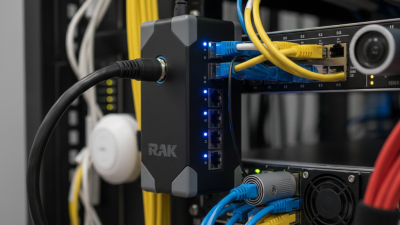
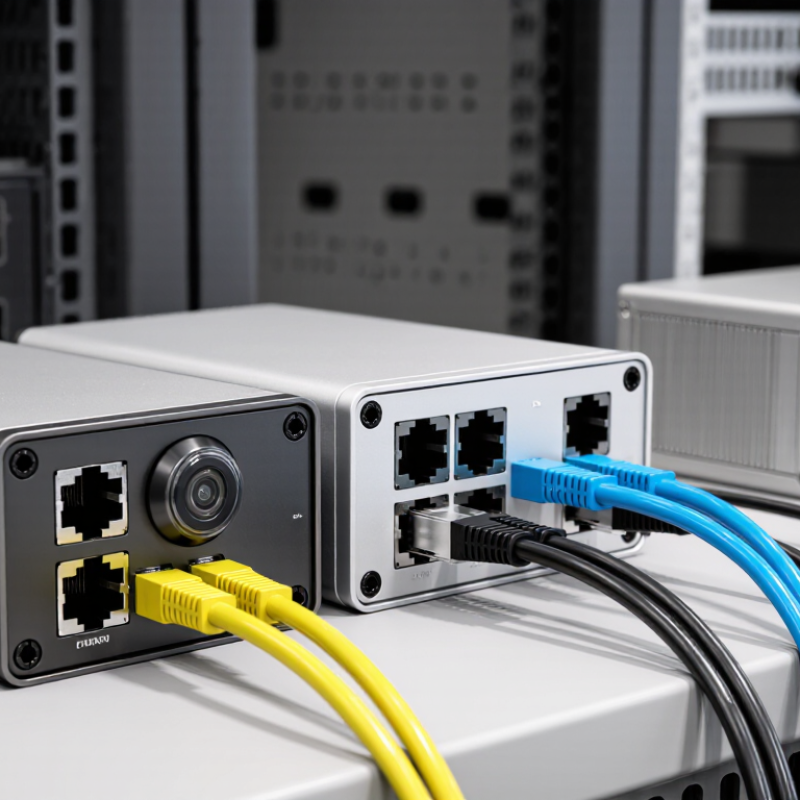
A PoE splitter separates network data from electrical power. It receives one PoE-enabled Ethernet connection and provides two outputs: Ethernet data and low-voltage DC power. This design supports cameras, access points, sensors, and other devices without built-in PoE.
Compatibility matters more than appearance. Check the required IEEE 802.3af, 802.3at, or 802.3bt standard, output voltage, wattage, and connector size. A 12-volt device may fail when connected to a 24-volt output. Check the details. Cable distance, heat, moisture, and surge exposure also affect field performance.
Global network deployment adds practical challenges. Buyers should verify local safety certifications, operating temperature ranges, and adapter requirements before shipment. An outdoor installation may need sealed housing and extra surge protection. In warehouse tests, a splitter can perform well on a short cable but become unstable near the maximum distance. That result deserves attention, not excuses. I have also seen installation teams overlook connector polarity during replacement work. Clear labels reduce that risk. The best choice is not always the highest-wattage model. It should match the powered device, network standard, environment, and service conditions. Reliability grows from careful matching and repeated testing.
| Selection Dimension | Recommended Specification | Relevant Technical Data | Why It Matters in Global Deployment | Best-Fit Use Case |
|---|---|---|---|---|
| PoE Standard Compatibility | IEEE 802.3af / 802.3at / 802.3bt |
802.3af: up to 15.4 W from the power source and 12.95 W available to the powered device. 802.3at: up to 30 W from the power source and 25.5 W available to the powered device. 802.3bt: supports higher-power Type 3 and Type 4 applications. |
Standards-based negotiation improves interoperability and helps prevent unsuitable power delivery to connected equipment. | Enterprise networks, access points, IP cameras, sensors, and other Ethernet devices with defined PoE requirements. |
| Power Budget | Choose an output rating with at least 20% headroom | A splitter should provide more power than the device's normal consumption. For example, a 10 W device should generally use a splitter rated above 12 W after accounting for conversion loss. | Extra capacity helps accommodate startup current, cable loss, temperature variation, and aging components. | Outdoor cameras, wireless access points, industrial gateways, and edge devices with variable loads. |
| Output Voltage | Match the powered device exactly | Common regulated outputs include 5 V DC, 9 V DC, 12 V DC, and 24 V DC. The voltage must match the equipment label or manufacturer specification. | Incorrect voltage can cause unstable operation, permanent equipment damage, or failure to start. | Legacy Ethernet devices, compact routers, access-control equipment, and embedded network appliances. |
| Data Interface | 10/100/1000 Mbps pass-through for general deployment | A gigabit-capable splitter supports 10BASE-T, 100BASE-TX, and 1000BASE-T Ethernet links when paired with suitable cabling and network equipment. | Gigabit support avoids creating a 100 Mbps bottleneck as network bandwidth requirements increase. | High-resolution surveillance, Wi-Fi 6/6E access points, digital signage, and business LAN connections. |
| PoE Input Type | Active PoE detection preferred | Active splitters identify IEEE-compliant PoE before applying power. Passive PoE splitters do not perform the same standardized detection and require compatible equipment at both ends. | Active detection provides a safer choice for mixed-vendor and geographically distributed networks. | Global procurement, multi-site installations, and networks with equipment from different manufacturers. |
| Connector and Polarity | DC plug or terminal connection matching the device | Common options include 5.5 mm DC barrel connectors and screw-terminal outputs. Check plug dimensions, center-positive or center-negative polarity, and current rating. | Connector mismatch is a frequent cause of installation delays and nonfunctional field devices. | Replacement projects, retrofit installations, and deployments using region-specific device models. |
| Cable Requirements | Category 5e or higher for gigabit links | Balanced twisted-pair Ethernet cabling is normally used. The maximum permanent copper Ethernet channel is typically designed around a 100 m total channel length, including patch cords. | Correct cable category, length, termination, and condition affect both data reliability and power delivery. | Office buildings, campus networks, retail sites, and distributed security systems. |
| Energy Efficiency | Regulated DC conversion with low standby consumption | Conversion efficiency varies by model and load. A practical selection target is a documented efficiency of approximately 85% or higher under the intended operating load. | Higher efficiency reduces heat, operating cost, and stress on power supplies, especially in continuously operating installations. | Large-scale deployments, solar-assisted sites, telecom cabinets, and energy-conscious facilities. |
| Environmental Protection | Select an enclosure rating appropriate to the site | Indoor models are suitable for clean, dry rooms. Outdoor or industrial installations may require sealed enclosures, wide operating-temperature specifications, surge protection, and resistance to dust or moisture. | Environmental suitability improves service life and reduces maintenance in harsh or remote locations. | Outdoor surveillance, transportation infrastructure, factories, warehouses, and utility sites. |
| Electrical Safety | Overcurrent, overvoltage, short-circuit, and surge protection | Look for documented protection features and safety approvals applicable to the destination market. Protection performance depends on the complete installation, including grounding and upstream equipment. | Protection reduces the risk of damage caused by wiring faults, transient events, and unstable power conditions. | Commercial buildings, public infrastructure, industrial networks, and installations in areas with frequent electrical disturbances. |
| Regional Deployment | Verify compliance with local electrical and radio-free network requirements | PoE splitters normally convert Ethernet-delivered DC power to a local DC output; the external AC power supply, if included, must match the destination voltage, plug type, frequency, and applicable safety requirements. | Local compatibility helps simplify customs clearance, installation, inspection, warranty handling, and replacement logistics. | Cross-border projects, international system integrators, and multi-country rollouts. |
| Installation Format | Compact external, DIN-rail, wall-mount, or rack-accessory format | Select the mounting method according to available space, cable routing, vibration level, ventilation, and maintenance access. | A suitable mechanical format improves cable management and reduces accidental disconnection. | Server rooms, control cabinets, retail displays, access-control panels, and space-constrained edge locations. |
| Overall Best Choice | Active, standards-compatible, gigabit, regulated-output splitter | The most versatile configuration typically supports the required IEEE PoE class, provides the exact DC output voltage, offers adequate power headroom, and supports 10/100/1000 Mbps data pass-through. | This combination balances safety, interoperability, performance, and long-term availability for international network projects. | Most enterprise, security, smart-building, and multi-site network deployments. |
Technical values are standard reference figures or common design targets. Always verify the splitter datasheet, powered-device input requirements, cable distance, environmental conditions, and destination-market compliance before purchase.