Leave Your Message

2026 Best SenseCAP PoE Splitter for Global Buyers?

Choosing the best Sensecap Poe Splitter for global buyers requires more than comparing prices or port counts. A reliable splitter must match the SenseCAP device, injector, cable length, network speed, and local power conditions. It should deliver steady power beside a greenhouse rack, outdoor cabinet, or remote environmental sensor. Small details matter. A loose connector can stop an entire monitoring point.

Eric Pan, founder and CEO of Seeed Studio, has described the company’s mission with the words, “Make innovation accessible to everyone.” That principle is useful here. A practical Sensecap Poe Splitter should simplify deployment, not create another technical obstacle. Buyers need clear voltage information, tested compatibility, durable housing, and honest installation guidance. Certifications and regional seller support also deserve attention.

Real-world testing can reveal weaknesses that product pages hide. Heat buildup may appear after several hours. A short cable may work indoors but fail across a larger installation. Some models provide excellent value, yet lack weather protection or detailed documentation. That is easy to overlook.

The strongest 2026 options should balance stable power delivery, efficient design, global availability, and after-sales support. They should also explain their limits clearly. No splitter fits every network. This guide compares the important specifications and practical trade-offs, helping international buyers choose with greater confidence. A careful decision today can prevent repeated resets, wasted installation time, and unnecessary replacement costs later.
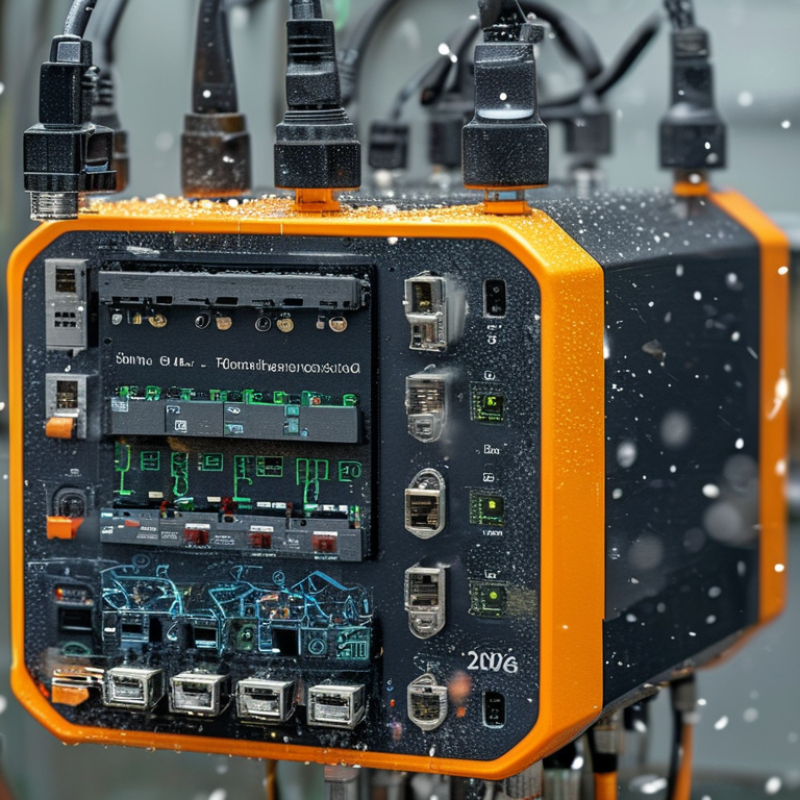
2026 Best SenseCAP PoE Splitter for Global Buyers?

What Is the SenseCAP PoE Splitter and How Does It Work?

What Is the SenseCAP PoE Splitter and How Does It Work?

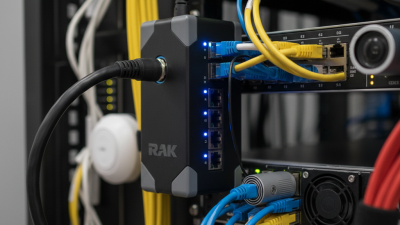
A SenseCAP PoE splitter separates network data and electrical power from one Ethernet cable. It is useful when a remote sensor or gateway lacks native Power over Ethernet support. The splitter receives power and data through its PoE input. It then sends data through an Ethernet port and power through a DC output. This arrangement can reduce cable clutter near outdoor equipment.

A compatible splitter must match the power standard, output voltage, connector size, and polarity of the connected device. Many units support common PoE standards, such as 802.3af or 802.3at, but buyers should verify the product label. A short Ethernet cable may connect the splitter to a network switch, while the DC lead powers the endpoint. In practical installations, stable voltage matters more than maximum wattage. A mismatch can cause random restarts or permanent damage. That detail is easy to miss.

Tips: Check the device manual before ordering. Confirm input standard, DC voltage, amperage, connector dimensions, and cable length. For outdoor use, place the splitter inside a sealed enclosure and protect connectors from moisture. Test the setup indoors first. I would also inspect heat buildup after several hours, because a cool enclosure can become surprisingly warm. Regional plug adapters may be needed for the power source, but they do not replace correct PoE compatibility.
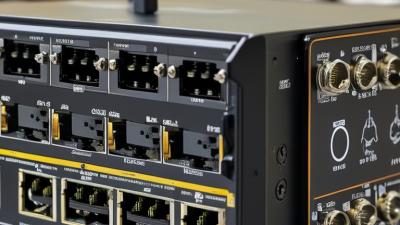
Key Specifications for Evaluating SenseCAP PoE Splitters in 2026

2026 Best PoE Splitter for Global Buyers?

Key Specifications for Evaluating PoE Splitters in 2026

Choosing a PoE splitter requires more than checking its advertised wattage. IEEE 802.3bt defines Type 3 delivery up to 60 watts and Type 4 up to 90 watts at the power source. Actual device output is lower. Cable loss, temperature, and conversion efficiency matter. A dependable splitter should state both input limits and guaranteed output power.

Check voltage range, connector polarity, and supported Ethernet speed. Gigabit compatibility remains practical for cameras, gateways, and industrial sensors. Look for 10/100/1000 Mbps support, 12V or 24V output options, and efficiency above 90% where possible. MarketsandMarkets’ 2024 Power over Ethernet report estimates the sector will grow from about 1.4 billion dollars in 2023 to 2.1 billion dollars by 2028. That growth increases product variety, but not necessarily product quality.

Thermal performance deserves close inspection. A metal enclosure, surge protection, and operation beyond 50°C can prevent unstable field behavior. Safety certification should match the buyer’s region, while documented isolation reduces installation risks. A neat datasheet can still mislead. I would request test conditions, cable length, and load details before ordering. Short tests are not enough. Long-term testing under heat and maximum load is better, although many evaluations remain imperfect. According to IEEE 802.3bt guidance, classification and negotiation should be verified, not assumed from a plug shape.

SenseCAP PoE Splitter Compatibility with Devices and Networks

2026 Best PoE Splitter for Global Buyers?

Device and network compatibility should guide every PoE splitter purchase. IEEE 802.3af supplies up to 15.4 watts, while 802.3at supports up to 30 watts at the power source. The newer 802.3bt standard reaches 60 or 90 watts, depending on its type. Actual device power remains lower after cable loss. A splitter must match both the network standard and the device input, such as 5V, 9V, 12V, or 24V DC.

Compatibility also depends on whether the switch provides active PoE or passive power. Active PoE negotiates power before delivery. Passive PoE does not. That difference matters for cameras, access points, industrial gateways, and small computers.

Gigabit support is useful, but only when the splitter preserves data across all four twisted pairs. Category 5e or better cabling usually supports a 100-meter Ethernet channel under suitable conditions. Grand View Research valued the global PoE market at about USD 1.34 billion in 2023, with a projected 13.5% CAGR through 2030. Growth is strong, but compatibility errors remain common.

Tips: Check the splitter label, switch output, DC plug size, polarity, and required wattage. Test the setup with a short cable first. I still verify twice; product pages can be incomplete. A splitter may deliver power while quietly failing data transmission. That small mistake can waste an entire installation.

Installation Steps for Power Delivery and Network Connection

For global buyers, the best PoE splitter should match the network standard, device voltage, and environmental conditions. IEEE 802.3af supplies up to 15.4 watts, while 802.3at supports up to 30 watts. The newer 802.3bt standard can deliver 60 or 90 watts, depending on its type. Check the endpoint label before purchasing. A higher rating does not automatically mean safer operation.

Installation should begin with a powered-off network switch. Connect the Ethernet cable to the splitter’s PoE input port. Then connect the splitter’s data output to the device. Attach the DC plug only after confirming its voltage and polarity. Most small terminals use 5V, 9V, or 12V, but assumptions can damage equipment. Uptime Institute’s 2024 Global Data Center Survey continues to identify power problems as a major source of service disruption, so verify every connection carefully. My practical weakness is rushing this check. It saves little time.

Tips: Keep the splitter near the powered device, not inside a hot enclosure. Use shielded cable in electrically noisy areas. Leave power headroom of at least 20 percent. Test link speed and voltage separately. If the device restarts under load, measure voltage again; the cable may be too long, or the splitter may be under-rated. The Ethernet Alliance also emphasizes interoperability, so select equipment certified for the same PoE class.

Global Buying Factors: Compliance, Pricing, Shipping, and Support

2026 Best PoE Splitter for Global Buyers?

For global buyers, compliance should guide the shortlist before price. A reliable PoE splitter should match IEEE 802.3af, 802.3at, or 802.3bt input standards. Under IEEE 802.3bt, equipment can receive up to 71.3 watts through suitable configurations. Check voltage, polarity, insulation, and thermal limits carefully. IEC 62368-1 certification also matters for many information-technology products. Certification alone is not enough. Test reports, certificate numbers, and regional markings deserve verification.

Pricing needs a complete landed-cost calculation. Include the splitter, power adapter, freight, customs fees, and possible local taxes. The World Bank’s 2023 Logistics Performance Index measures customs, infrastructure, shipment quality, and timeliness on a one-to-five scale. Those factors can change the real purchase cost. A cheaper unit may become expensive after delays or replacement shipping. That happens.

Shipping reliability deserves practical questions. Ask for carton dimensions, tracking options, declared product details, and spare-unit availability. The UNCTAD Review of Maritime Transport 2024 highlights continuing pressure on global shipping networks and costs. For urgent deployments, regional inventory can reduce uncertainty. Support should include wiring diagrams, firmware guidance, response-time targets, and clear warranty terms. A supplier that answers technical questions before payment is easier to trust afterward. Still, published specifications can be incomplete. Buyers should request samples and test them under full load, heat, and unstable network conditions.

2026 Best SenseCAP PoE Splitter for Global Buyers? - Global Buying Factors: Compliance, Pricing, Shipping, and Support

Evaluation Dimension Recommended Specification Typical 2026 Reference Data Global Buyer Relevance Verification Point
PoE Input Standard IEEE 802.3af/at or 802.3bt, depending on the required load 802.3af: up to 15.4 W from the PSE; 802.3at: up to 30 W; 802.3bt Type 3: up to 60 W Standard negotiation improves compatibility with managed and enterprise PoE switches Confirm whether the splitter is active IEEE-compliant or passive PoE
Output Voltage Selectable or fixed DC output matching the powered device Common outputs include 5 V, 9 V, 12 V, and 24 V DC Correct voltage reduces the risk of device damage and field failures Check voltage tolerance, polarity, connector size, and maximum current
Output Power Capacity At least 20% more capacity than the device’s measured peak demand Typical low-power deployments require 5–15 W; industrial gateways may require 15–30 W Extra capacity supports startup current and temperature-related derating Compare continuous output power with peak and startup requirements
Conversion Efficiency High-efficiency DC conversion with thermal protection A practical target is approximately 85%–92%, depending on input and load Higher efficiency lowers heat generation and long-term operating cost Request efficiency curves rather than relying only on a single headline value
Operating Temperature Industrial temperature range for outdoor cabinets and unconditioned sites Preferred range: at least −40 °C to +70 °C; commercial units commonly support 0 °C to +40 °C Temperature rating affects reliability in outdoor, desert, and cold-climate installations Verify whether the rating applies to full output power
Ingress Protection IP30 for indoor cabinets; IP65 or higher for exposed outdoor installation IP65 protects against dust and water jets; it does not automatically indicate immersion protection The enclosure rating should match the installation environment and cabinet design Look for an independent test report or certification reference
Safety and EMC Compliance Documentation suitable for the destination market Common requirements include CE/UKCA for applicable markets, FCC Part 15 for the United States, and RoHS restrictions Compliance documents reduce customs, procurement, and deployment risk Request declarations, test reports, and the exact model identifier
Typical Planning Price Select by standard, output power, enclosure, and certification package Approximately US$12–25 for basic indoor units; US$25–60 for higher-power or industrial-rated units Useful for preliminary budgeting before volume quotation and tax calculation Confirm whether the quotation includes cable, enclosure, certification, VAT, and duties
Minimum Order Quantity Low-MOQ trial order followed by volume pricing Common trial quantities are 1–10 units; project orders may begin at 50–100 units A low MOQ helps validate electrical and environmental performance before rollout Ask whether pilot units are from the same production revision as bulk units
International Shipping Tracked parcel, express, or consolidated freight options Indicative transit: 3–7 business days express; 7–20 business days standard air; 25–45 days sea freight Transit time influences deployment schedules and spare-part planning Separate transport time from production lead time and customs clearance
Warranty and RMA Written warranty with a defined replacement process A 12–24 month limited warranty is common for commercial electronics Clear RMA terms reduce downtime when units fail in remote locations Check return address, diagnostic requirements, shipping responsibility, and repair time
Technical Support English documentation, wiring diagrams, and pre-sales engineering support Preferred response target: one business day for standard inquiries and same-day escalation for deployment issues Remote troubleshooting is especially important for distributed IoT installations Request installation guides, pinouts, test procedures, and firmware change records
Recommended Buyer Profile Choose the lowest-power compliant option that meets the device’s peak load 802.3af for low-power endpoints; 802.3at for higher startup loads; 802.3bt for demanding devices Avoids unnecessary cost, heat, and power consumption Test the complete chain: switch, Ethernet cable, splitter, connector, and endpoint

Note: Prices and shipping times are planning ranges for international procurement and can vary by quantity, destination, Incoterms, customs duties, certification scope, and production capacity. Compliance should be confirmed for the exact model and target market.