Choosing the best Ethernet Switch Sfp Port from China requires more than comparing prices. China has many experienced manufacturers, but product quality varies widely. A low-cost switch may look attractive online, yet unstable cooling, weak firmware, or poor SFP compatibility can create problems later. That is the uncomfortable part.
This guide examines practical details that network buyers can verify. These include switching capacity, forwarding rate, port numbers, SFP and SFP+ support, power design, and operating temperature. It also considers real installation conditions, such as crowded server racks, long fiber runs, and dusty factory environments. A reliable switch should maintain stable links during continuous traffic, not only during a short demonstration. Buyers should request datasheets, test reports, warranty terms, and sample units before placing large orders. Small tests reveal more than polished product photos.
The comparison also looks at manufacturer experience, firmware updates, quality-control procedures, and technical support. Compliance documentation matters, but it should be checked against the destination market and actual model. No shortlist is perfect. A brand with strong hardware may offer limited software features, while a cheaper model may provide surprisingly good performance. Personal testing can also favor familiar interfaces. That bias deserves attention. The best choice depends on network size, fiber type, management needs, budget, and future expansion. By weighing measurable performance with supplier reliability, buyers can make a safer and more informed decision when sourcing from China.
Understanding Ethernet Switches with SFP Ports from China
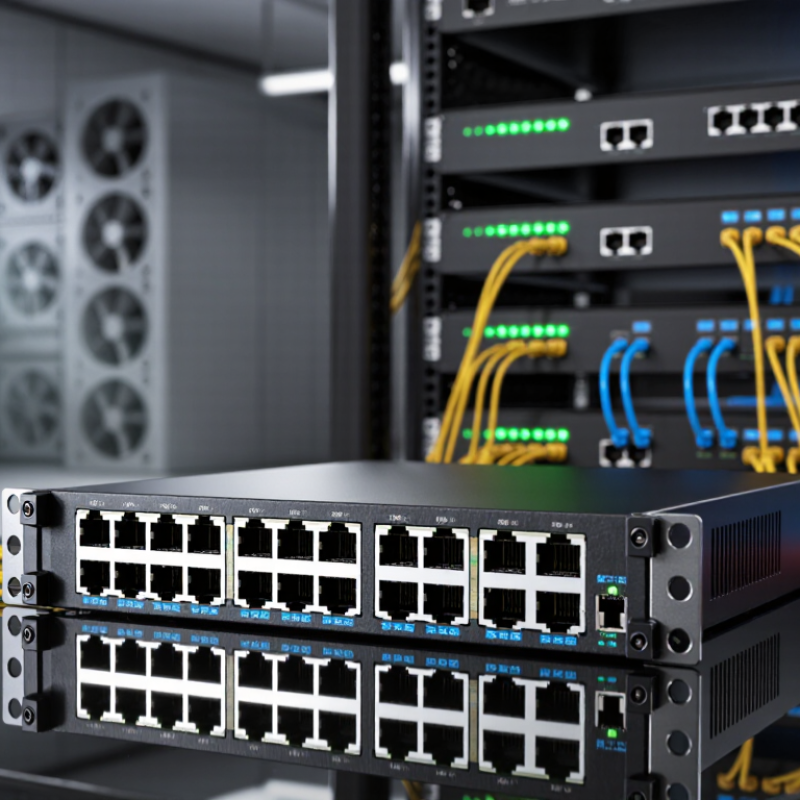
An Ethernet switch with SFP ports from China can connect copper networks to fiber links. SFP means Small Form-factor Pluggable. The port accepts replaceable transceivers for different distances and cable types. A 1G SFP may support single-mode fiber across several kilometers, while a copper module handles short cabinet connections. Speed depends on the switch, module, and network standard, not the slot alone.
Practical evaluation should begin with the datasheet. Check switching capacity, packet-forwarding rate, VLAN support, PoE budget, and operating temperature. In a server room, a quiet fanless model may suit office networks. A dusty workshop needs stronger ventilation and a wider temperature range. Ask for module compatibility lists and firmware records. Some low-cost switches offer impressive port counts but limited management functions. That difference becomes obvious during troubleshooting.
Reliable suppliers should provide test reports, clear warranty terms, and documentation for regional compliance requirements. Request sample testing before a large purchase. Connect the switch to several fiber lengths, monitor packet loss, and test recovery after a power interruption. I would also inspect the web interface; awkward menus can waste hours later. Cost matters, but firmware updates and technical support often matter more. One weak point remains: published performance figures may reflect ideal laboratory conditions, not a crowded network cabinet.

The best switch depends on the required uplink speed, network scale, and fiber distance. This chart compares common SFP-family interface standards used in Ethernet switches, without referring to any company or brand.
Selection guide: 1 Gbps SFP is suitable for standard fiber uplinks, 10 Gbps SFP+ is common for server rooms and backbone connections, and 25 Gbps SFP28 is designed for higher-density data-center networks. Always verify transceiver compatibility, fiber type, switching capacity, and supported distances before purchasing.
When choosing the best Ethernet switch with SFP ports from China, specifications need practical testing. A useful unit supports the fiber types and distances your network actually requires. Check whether its SFP slots accept 1G, 2.5G, or 10G transceivers. Compatibility matters more than a crowded port list. I would request an interoperability test before ordering large quantities. This catches unstable links and misleading speed claims.
The switching fabric should handle full-duplex traffic without becoming a bottleneck. Look for adequate backplane capacity, packet buffering, VLAN control, QoS, and loop prevention. For video, factory sensors, or server uplinks, low latency and steady throughput are essential. Managed models should offer clear web and command-line controls, logs, firmware updates, and configuration backup. Remote monitoring through SNMP can reduce response time. Keep it simple.
Hardware quality also depends on thermal design, power protection, and manufacturing consistency. For cabinets with dust or heat, verify the operating range and cooling method. Ask for burn-in records, test reports, traceable serial numbers, and realistic warranty terms. Independent certifications and transparent documentation strengthen supplier credibility. One weakness is often overlooked: cheaper switches may use excellent chips but weak power components. That choice can create random reboots after months of service. I would inspect the power supply, grounding, and spare-transceiver policy before approval. A reliable supplier should answer those questions precisely, not vaguely.
Choosing the best Ethernet switch with an SFP port depends on the network’s actual workload. In small offices, an unmanaged switch offers simple plug-and-play installation. It suits printers, computers, and basic uplink connections. However, it provides little visibility when faults appear. A managed switch adds VLANs, traffic monitoring, port controls, and link diagnostics. These features matter when several departments share one network.
For factories, warehouses, and outdoor cabinets, an industrial switch is usually more suitable. Its reinforced housing, wider temperature range, and stronger vibration resistance support harsher environments. Some Chinese switch models also combine copper ports, SFP slots, and redundant power inputs. Check the stated temperature range carefully. Marketing descriptions can sound stronger than real installation conditions.
Power over Ethernet switches fit surveillance systems, access points, and wireless phones. They can reduce separate power cabling, but their power budget must match every connected device. A Layer 2 switch is often enough for local segmentation. Layer 3 capability becomes useful when routing is needed between VLANs. For long-distance fiber links, select compatible SFP modules and confirm single-mode or multimode requirements. Testing interoperability before deployment is practical, not optional. In one installation, an incorrect optical module caused unstable links despite normal port indicators. That experience changed my checklist: verify fiber type, transmission distance, power capacity, firmware support, and after-sales documentation before purchasing. Price still matters, but downtime costs more.
Choosing the best Ethernet switch with SFP ports from China requires more than comparing port counts. IDC’s 2024 Worldwide Ethernet Switch Tracker reported approximately 20% market revenue growth in 2023, driven by data-center demand. That growth also creates specification noise.
Check the SFP interface carefully. IEEE 802.3 standards define speeds, media types, and signaling requirements. Confirm whether the switch supports 1G, 10G, or higher-speed modules. Match wavelength, fiber mode, transmission distance, and connector type. Copper SFP modules may need different power and thermal limits. Test them together, not separately. A short bench test can reveal link drops, excessive heat, or unstable auto-negotiation.
Quality evidence matters. Request packet-loss results, switching capacity, forwarding rate, temperature testing, and firmware records. MTBF numbers look impressive. They are weak without test conditions. IDC’s tracker also shows strong data-center adoption, so sustained traffic testing is more meaningful than a simple port-link demonstration. Check whether the manufacturer provides serial-number traceability, controlled component sourcing, and documented burn-in procedures. ISO 9001 certification supports process consistency, but it does not prove every unit is reliable. Ask for independent test reports and sample units.
Manufacturer reliability is visible in small details. Can engineers explain SFP compatibility without vague promises? Are replacement parts available for several years? Does technical support respond with measured troubleshooting steps? I would inspect three samples from different production batches. One perfect sample proves little. A minor weakness in documentation should not be ignored; it may signal larger control problems.
| No. | Evaluation Dimension | Recommended Technical Benchmark | What to Verify | Quality Indicator | Risk Level |
|---|---|---|---|---|---|
| 1 | SFP Port Speed | 1G SFP for standard uplinks; 10G SFP+ for higher-bandwidth aggregation. | Confirm whether the port is SFP or SFP+, and check the supported optical or copper transceiver speed. | The product specification clearly states supported port speeds and module types. | Medium |
| 2 | Fiber Type Compatibility | Multimode fiber commonly supports short-distance links; single-mode fiber is used for longer distances. | Match the transceiver wavelength, fiber type, connector, and rated transmission distance. | Compatibility information is provided for duplex LC, single-mode, multimode, and BiDi options where applicable. | Medium |
| 3 | Ethernet Standards | Support for IEEE 802.3 Ethernet and relevant extensions such as 802.3u, 802.3ab, 802.3z, or 802.3ae according to port speed. | Request the standards list in the datasheet and compare it with the planned network equipment. | Standards are listed precisely instead of using only general terms such as “high speed” or “industrial grade.” | Medium |
| 4 | Copper Port Capacity | Common configurations include 10/100/1000 Mbps RJ45 ports, with SFP or SFP+ uplinks for backbone connections. | Check the total number of RJ45 ports, auto-negotiation support, and whether all ports can operate simultaneously at rated speed. | The switching capacity and forwarding rate are stated for the complete port configuration. | Low |
| 5 | Switching Capacity | For a non-blocking design, the backplane capacity should cover full-duplex traffic across all active ports. | Compare the stated switching capacity with the sum of port speeds multiplied by two for full duplex. | The calculation is consistent with the number and speed of Ethernet and SFP ports. | Medium |
| 6 | Packet Forwarding Rate | The forwarding rate should be consistent with the advertised switching capacity and packet-size test method. | Check whether the value is measured in Mpps and whether the test uses minimum-size Ethernet frames. | The manufacturer publishes both the calculation method and the relevant packet size. | Medium |
| 7 | Managed Features | For managed networks, look for VLAN, QoS, STP/RSTP, link aggregation, port mirroring, and SNMP support. | Request the exact firmware feature list and confirm whether each feature is available in the selected hardware version. | The feature list identifies protocol versions, configuration limits, and firmware dependencies. | Medium |
| 8 | SFP Interoperability | The switch should support the required SFP or SFP+ module coding, speed, wavelength, and link budget. | Test the intended transceiver and verify DOM/DDM behavior, vendor-lock status, and optical power levels where supported. | The supplier provides an approved module list and documents third-party transceiver support. | High |
| 9 | Power Input and Efficiency | Input voltage, frequency, power consumption, and optional redundant power should match the installation environment. | Review power ratings, connector type, surge protection, and measured consumption under normal traffic. | Electrical ratings are supported by test reports and include operating tolerances. | Medium |
| 10 | Thermal and Environmental Rating | Commercial equipment is often rated around 0–40°C or 0–50°C; industrial models may support a wider range such as -40–75°C. | Check the operating temperature, humidity, vibration, installation altitude, and enclosure rating required by the project. | Environmental claims are supported by test conditions and certification documents. | High |
| 11 | Reliability Testing | The evaluation should include continuous traffic, port cycling, thermal operation, power cycling, and SFP insertion/removal tests. | Ask for test procedures, sample quantities, failure criteria, and retained production records. | Testing is repeatable, documented, and linked to a defined production model. | High |
| 12 | Compliance Documentation | Depending on the destination market, relevant documentation may include CE, FCC, RoHS, REACH, or local regulatory approvals. | Verify certificate numbers, issuing laboratories, product model coverage, and validity dates. | Certificates match the exact hardware version rather than a visually similar product. | High |
| 13 | Manufacturing Quality Control | A robust process should include incoming inspection, SMT process control, optical inspection, functional testing, and final inspection. | Review quality-control procedures, defect records, traceability, and calibration records for test equipment. | Serial-number or batch-level traceability is available from components through shipment. | High |
| 14 | Firmware and Security | Managed models should support secure administration, role-based access, configuration backup, and signed or controlled firmware updates where available. | Check firmware release history, vulnerability response procedures, password policy, and recovery options. | The supplier maintains documented firmware versions and provides security update communication. | High |
| 15 | Warranty and After-Sales Support | A written warranty, replacement process, technical support channel, and spare-unit policy should be defined before purchase. | Confirm warranty duration, response time, RMA procedure, repair location, and support language. | Terms are included in the quotation or contract and do not rely only on verbal promises. | High |
| 16 | Factory and Supply Stability | A reliable supplier should maintain consistent hardware revisions, component traceability, production capacity, and change-notification procedures. | Review production lead time, minimum order quantity, continuity plan, lifecycle policy, and notice period for design changes. | The supplier can provide stable samples, repeatable production units, and formal engineering-change control. | High |
What Is the Best Ethernet Switch with SFP Port from China?
Selecting the right Chinese Ethernet switch starts with your network’s actual workload. A small office may need eight copper ports and two SFP uplinks. A factory may require rugged housing, wider temperature tolerance, and stable fiber connections. Do not choose by port count alone. Check switching capacity, forwarding rate, VLAN support, and management features. These details affect daily performance.
SFP compatibility deserves careful attention. Confirm whether the switch supports single-mode or multimode fiber, required transmission distances, and the correct speed. Ask for a complete datasheet, test report, firmware details, and warranty terms. Certification records should match the exact shipping model. A similar-looking unit is not enough. Request communication logs for technical support, especially when your network operates across different time zones. This can reveal the supplier’s reliability before installation.
Tips: Request a sample. Test it under full traffic. Inspect the console interface, fan noise, heat, and recovery after power loss. Keep written records of every test. I have learned that attractive specifications can hide weak firmware or unclear compatibility. A longer warranty may help, but responsive engineering support matters more. If the supplier avoids precise answers, pause the purchase. Your first evaluation may be imperfect. That is acceptable, if it exposes risks before a larger order.