Top Ethernet Switches With SFP Port for High Performance Networking?
In the fast-evolving world of networking, the significance of the Ethernet Switch SFP Port cannot be overstated. Industry expert Dr. Jane Taylor emphasizes, "The SFP ports in Ethernet switches offer flexibility and scalability that are crucial for modern networks." This flexibility is vital as organizations strive for high performance and efficient data management.
The ongoing shift towards data-centric operations demands robust networking solutions. Ethernet switches equipped with SFP ports enable seamless upgrades and interoperability. They accommodate various fiber and copper connections, allowing businesses to adapt to changing needs without overhauling entire infrastructures.
However, not all Ethernet switches are created equal. Some may not deliver the expected performance. Choosing the right switch requires careful consideration of specifications and future networking requirements. Reflecting on various options can reveal surprising limitations. Awareness of these details is crucial in making informed decisions for network enhancement.
Understanding SFP Ports: Definition and Functionality in Ethernet Switches
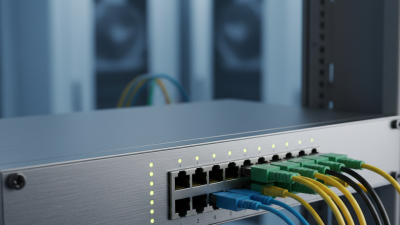
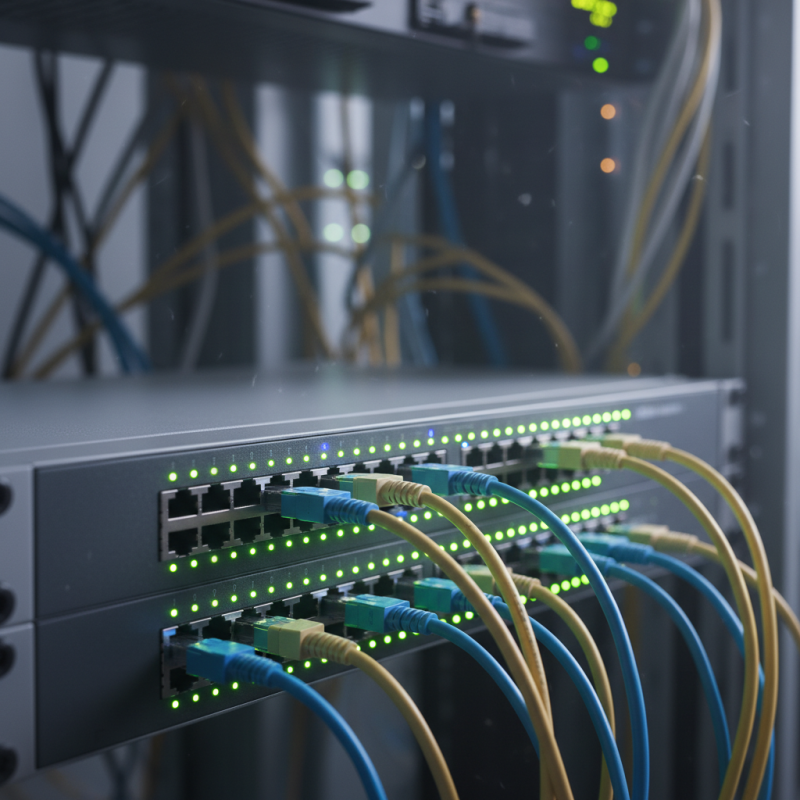
SFP ports, or Small Form-factor Pluggable ports, play an essential role in Ethernet switches. They provide flexibility in choosing the right network interface. SFP ports support various types of fiber and copper cables. This adaptability is crucial for modern networking needs.
In high-performance environments, SFP ports enhance bandwidth and connectivity. Users can easily swap different transceivers as demand changes. This functionality reduces downtime. Additionally, SFP ports allow for longer distances in network configurations. They meet the requirements of data centers and enterprise networks effectively.
Despite their advantages, SFP ports can pose challenges. They require careful selection of transceivers to ensure compatibility. Incorrect choices can lead to network issues. Understanding the specifications and performance metrics is vital. Misconfigured ports can result in reduced speed or connection failures. This aspect needs thorough consideration for optimal performance.
Features to Look for in High-Performance Ethernet Switches
When choosing high-performance Ethernet switches with SFP ports, several key features are essential. First, consider the throughput capability. Effective switches can handle large data transfers. Look for at least 10 Gbps per port for optimal performance.
Another critical aspect is latency. Lower latency improves data transmission speed in high-demand environments. Research indicates that switches with less than 1 ms latency can significantly enhance network efficiency. Additionally, thermal management features are vital. Proper cooling ensures longevity and avoids overheating during heavy usage.
**Tip:** Always check for scalability options. A switch that cannot grow with your network needs will become obsolete quickly.
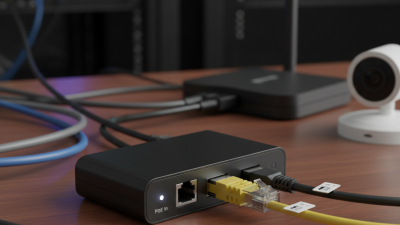
Power over Ethernet (PoE) capabilities also stand out. They allow devices to receive power and data through a single cable. This can simplify network design. According to industry reports, networks utilizing PoE can cut installation costs by up to 30%.
**Tip:** Review the switch’s management capabilities. A user-friendly interface will ease configuration and maintenance.
Implementation of quality-of-service (QoS) features guarantees bandwidth allocation to critical applications. These features can help prioritize data traffic, especially in congested networks. However, ensure that QoS settings are tailored to your network needs for maximum effectiveness. Balancing all these elements will ensure you select the most effective Ethernet switch for high-performance networking.
Top Ethernet Switches With SFP Port for High Performance Networking
| Model |
Ports |
SFP Ports |
Speed |
Features |
| Switch A |
24 |
4 |
10/100/1000 Mbps |
Managed, VLAN Support |
| Switch B |
48 |
8 |
1/10 Gbps |
Layer 2/3, QoS |
| Switch C |
12 |
2 |
1 Gbps |
PoE+, Compact Design |
| Switch D |
16 |
4 |
10 Gbps |
Stackable, Redundant Power |
Top Brands and Models of Ethernet Switches with SFP Ports
When choosing Ethernet switches with SFP ports, several brands stand out for their reliability and performance. These switches cater to businesses that require high-speed connections. They typically support both copper and fiber connections, offering great flexibility. This capability is essential for optimizing network performance, especially in data-intensive environments.
Some popular models feature a user-friendly interface, allowing for easy configuration. These models often come equipped with advanced management features, such as VLAN support and traffic monitoring. However, many users struggle with setup complexity. Documentation may not always provide clear guidance, leading to confusion. A switch that works well for one scenario may not fit another.
In the world of networking, keeping your system updated is crucial. Regular firmware updates can enhance security and performance. Yet, many users overlook this aspect, exposing their networks to risks. Investing in an Ethernet switch with SFP ports should involve considering future needs. Anticipating growth can influence your choice in models. Selecting the right switch is not just about immediate requirements but also about future-proofing your network.
Comparing Performance: Managed vs. Unmanaged Ethernet Switches
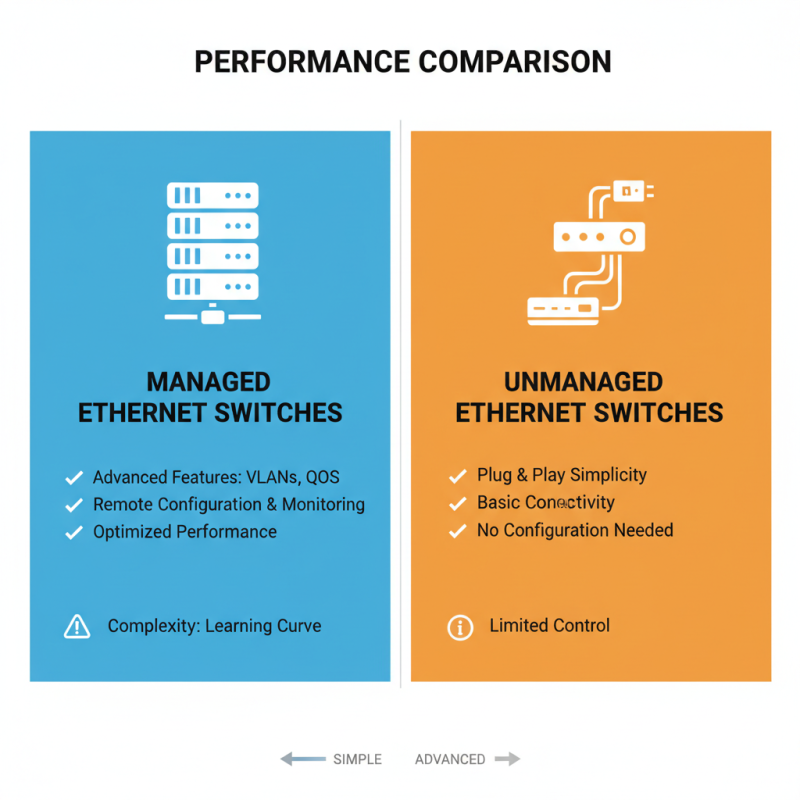
When it comes to networking, the choice between managed and unmanaged Ethernet switches plays a crucial role. Managed switches offer advanced features like VLAN support, traffic prioritization, and remote management capabilities. This level of control allows network administrators to optimize performance based on specific needs. However, they can be complex to configure and may require a learning curve for users unfamiliar with networking concepts.
In contrast, unmanaged switches deliver simplicity. They provide plug-and-play functionality, making them ideal for small or home office setups. Users do not need to delve deep into configurations. Yet, the lack of management features can limit performance monitoring. If a network issue arises, troubleshooting becomes challenging without the insights that managed switches provide.
Both options have their merits. Managed switches are perfect for organizations needing control and flexibility. They are not suitable for everyone due to their complexity. Unmanaged switches offer ease of use but lack advanced features. Evaluating the specific requirements of the network is essential for making an informed choice.
Applications and Use Cases for SFP Port Ethernet Switches
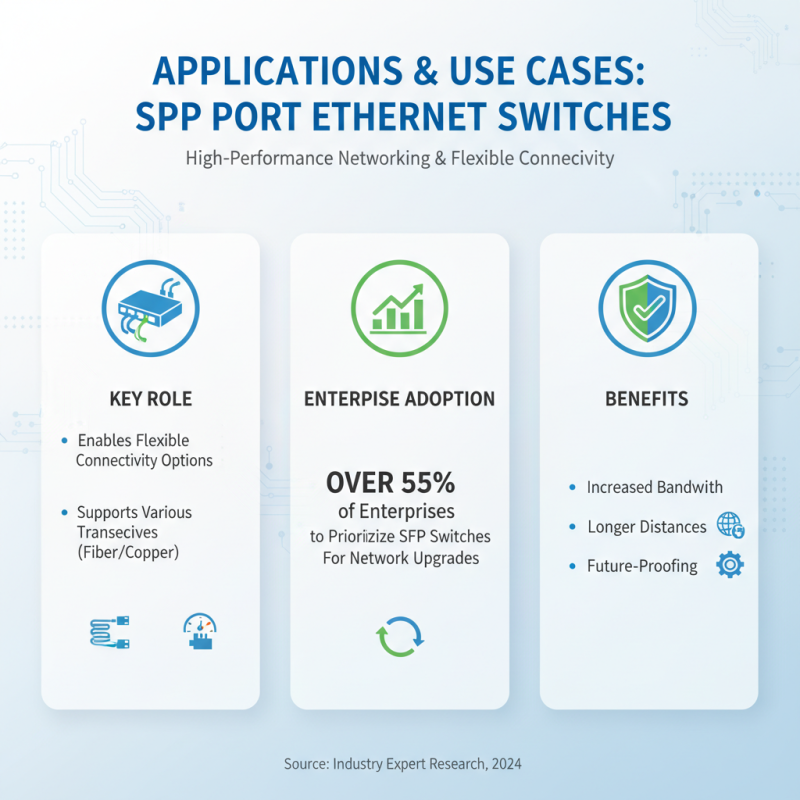
Ethernet switches with SFP ports play a crucial role in high-performance networking. These switches enable flexible connectivity options. They support various transceivers for different network needs. According to research from industry experts, over 55% of enterprises will prioritize SFP-enabled switches in their upcoming networking upgrades.
These switches are ideal for data centers and enterprise networks. They excel in environments where high bandwidth is essential. For example, SFP ports facilitate the connection of multiple devices over greater distances. This supports applications like video streaming, cloud computing, and massive data transfers. A 2022 report indicates that organizations using SFP-enabled switches saw a 30% increase in network efficiency.
Nonetheless, challenges exist. Not all SFP ports support the same types of transceivers. This can create compatibility issues. Additionally, a lack of standardization may lead to confusion over which transceiver to use. Networking teams often find themselves overwhelmed by options. These considerations are vital in ensuring optimal performance. Proper planning and knowledge can help mitigate these concerns.