Ultimate Tips for Choosing the Best Poe Splitter for Your Needs?
Choosing the right Poe Splitter is crucial for optimizing your network setup. With so many options on the market, it can be overwhelming. Understanding the needs of your devices is essential. Poe Splitters deliver power and data using a single cable, simplifying your installation.
When selecting a Poe Splitter, consider factors like power output and compatibility. Not all devices require the same amperage. Some may need more power, while others can operate with less. Look for a trusted brand with positive reviews. Reliable performance is key in ensuring your devices function without interruption.
Don't overlook the importance of build quality and price. A cheap splitter may save money but could lead to issues later. Invest in a device that meets your requirements. It's worth the extra effort to avoid future headaches. Reflect on your options carefully, and choose wisely.
Understanding Power over Ethernet (PoE) and Its Applications
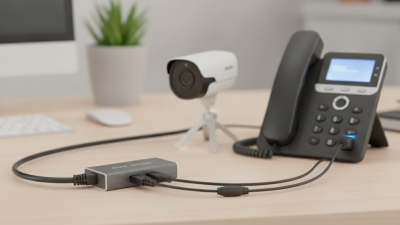
Power over Ethernet (PoE) technology has revolutionized how we manage devices in various environments. It allows both power and data to be transmitted over a single Ethernet cable. This is especially useful for devices like IP cameras, VoIP phones, and wireless access points. The simplicity of installation is advantageous in settings where power outlets are not readily available.
Understanding the applications of PoE can shape its effectiveness. For instance, in security systems, cameras placed in outdoor locations often require complicated wiring. PoE simplifies this by eliminating the need for separate power lines. However, installation challenges can arise, particularly in larger setups where cable length and power requirements must be carefully calculated. It's essential to assess the power needs of connected devices to avoid overloading the system.
In addition, not all PoE splitters are created equal. Their capacity may differ based on wattage, which can impact device performance. Variable quality can lead to inefficiencies. A reliable PoE splitter should provide a stable, continuous power supply. Users must remain vigilant and well-informed about their specific requirements to make the best choice. Integration with existing infrastructure also requires careful consideration of the network’s layout and device compatibility.
Different Types of PoE Splitters Available on the Market
When selecting a PoE splitter, it’s crucial to understand the available types on the market. PoE splitters come in various forms, catering to different needs and applications. The most common types include single-port splitters and multi-port splitters. A single-port splitter typically provides power and data to one device, like a security camera or Wi-Fi access point. This is ideal for simple setups. Multi-port splitters, however, allow you to connect multiple devices, making them suitable for complex configurations.
Another factor to consider is the power output capability. Some splitters indicate power levels, such as 15W or 30W, which determine what devices they can support. Be mindful that a splitter’s wattage must align with your devices' requirements. Furthermore, you may encounter passive and active PoE splitters. Passive splitters offer basic functionality, while active ones provide voltage regulation. This makes active splitters more reliable for sensitive equipment.
It's common to overlook the importance of compatibility when selecting a PoE splitter. Not all devices work seamlessly with every splitter type. Researching your gear and potential compatibility issues can save you from future headaches. In some cases, inadequate planning leads to underperformance or equipment damage. Thus, armed with knowledge and careful evaluation, you can make informed decisions tailored to your specific needs.
Key Features to Consider When Selecting a PoE Splitter
When choosing a PoE splitter, it’s crucial to consider several key features. Look for the output power requirements. Different devices need different levels of power. Make sure the splitter can provide enough wattage. Inadequate power can lead to device failures or erratic performance.
Another feature is the compatibility with your network. Some splitters work only with specific devices. Check the voltage output too. A mismatch can damage your equipment. Ensure that it fits your specific setup.
One essential tip is to consider the size and installation process. A compact design saves space. Easy installation reduces setup time. Think about the cable length as well. A longer cable might be needed for your arrangement.
Lastly, don't overlook the build quality. A durable design ensures longevity. However, some models may lack robustness. Reflect on user reviews to gauge reliability. Reliable feedback helps in making an informed decision.
Evaluating the Compatibility of PoE Splitters with Your Devices
When selecting a PoE splitter, compatibility is crucial. Many devices have different power requirements. Ensure the splitter can deliver the necessary wattage. According to industry reports, most cameras and access points require around 15W to 30W of power. Many PoE splitters only deliver up to 10W. A mismatch could lead to device failure or underperformance.
Check the voltage output as well. Devices may operate on 5V, 12V, or even 24V. The wrong voltage can damage your equipment. Always refer to the specifications of your devices before making a choice. Some users have overlooked these details, leading to costly repairs.
Tip: Always verify your device’s power needs. Use a multimeter to measure voltage requirements. This ensures your PoE splitter matches precisely. Another helpful tip is to investigate the cable lengths. Too long a cable can decrease efficiency and power delivery. Understanding your needs is key in this complex landscape.
Ultimate Tips for Choosing the Best Poe Splitter for Your Needs
Budgeting for Your PoE Splitter: Cost vs. Quality Considerations
When it comes to choosing the right Power over Ethernet (PoE) splitter, budgeting plays a crucial role. Cost and quality often go hand in hand, but finding balance is key. A high-priced PoE splitter doesn't always guarantee better performance. Cheaper options might meet basic needs, but can they deliver consistent reliability? Assess your specific requirements before making a purchase.
Consider how much power your devices require. For small cameras, an inexpensive splitter may suffice. However, larger devices may need more reliable solutions, which could cost more. Understand the specs thoroughly. Don't just look at the price tag. A well-built unit will save money in the long run by reducing failures and replacements.
Here are some tips to guide your decision. Research various models and read user reviews. Take note of the key features like power output and compatibility. Engage with tech forums; they often provide firsthand accounts. Seek advice from experts to understand the nuances of different splitters. A well-informed choice means fewer regrets later on. Your PoE setup deserves the best possible components without breaking the bank.
Ultimate Tips for Choosing the Best Poe Splitter for Your Needs
| Feature |
Description |
Cost Range |
Quality Considerations |
| Power Supply |
Ensure compatibility with the devices you are using |
$10 - $50 |
Look for reputable certifications |
| Number of Ports |
Consider how many devices will be connected |
$15 - $100 |
Multi-port splitters can reduce costs |
| Max Output Power |
Confirm it meets the total requirements of your devices |
$20 - $150 |
Higher output usually indicates better quality |
| Material and Build |
Durability and heat resistance |
$10 - $80 |
Metal housings are generally more sturdy |
| Size and Design |
Will it fit your setup? |
$10 - $50 |
Compact designs save space |