What is Power Over Ethernet Cord and How Does It Work?
In today's digital landscape, the demand for efficient power solutions continues to rise. One significant innovation is the Power Over Ethernet Cord. This technology enables the transmission of both data and electrical power through a single cable. It simplifies installations and reduces clutter, making it increasingly popular in various settings.
Expert Susan Thompson, a leading figure in the networking industry, emphasizes its advantages: "Power Over Ethernet Cord streamlines connectivity while reducing installation costs." This statement underscores the importance of integrating power and data seamlessly. With the surge in devices needing power, such as IP cameras and wireless access points, this technology has become essential.
However, challenges remain. Compatibility issues can arise when using different standards. Additionally, the distance limitations pose a problem for larger installations. Despite these concerns, the benefits of the Power Over Ethernet Cord make it a compelling choice for modern infrastructure. Understanding its workings can lead to more effective networking solutions.

What is Power Over Ethernet (PoE) Technology?
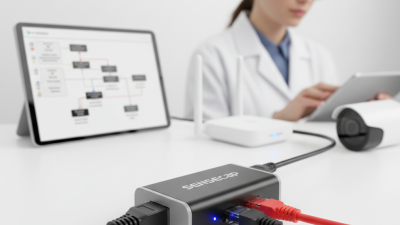
Power over Ethernet (PoE) technology enables the delivery of both data and electrical power through standard Ethernet cables. This innovation simplifies wiring, especially for devices in hard-to-reach locations. Cameras, wireless access points, and VoIP phones are common PoE-enabled devices. With PoE, a single cable reduces the number of cords needed, increasing organization and reducing clutter.
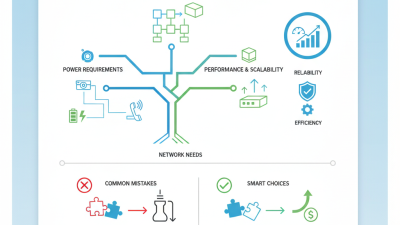
The technology works by sending power alongside data through the same cable. There are two main types of PoE: PoE and PoE+. The basic version provides 15.4 watts per port, while PoE+ offers up to 30 watts. This increased power capacity allows for more demanding devices. Challenges may arise in calculating power needs, especially with multiple devices. It’s crucial to assess the total power requirements to avoid overloading the system.
Despite its benefits, implementation can be tricky. Not all devices are PoE compatible. Improper installation may lead to power failure or operational issues. Understanding wiring standards and maintaining proper distances are essential for maximizing performance. Users often need to balance aesthetics with functionality, leading to difficult decisions. Thus, while PoE is efficient, careful planning is vital to avoid potential pitfalls.
Power Over Ethernet (PoE) Technology Usage Statistics
Key Components of Power Over Ethernet Cords
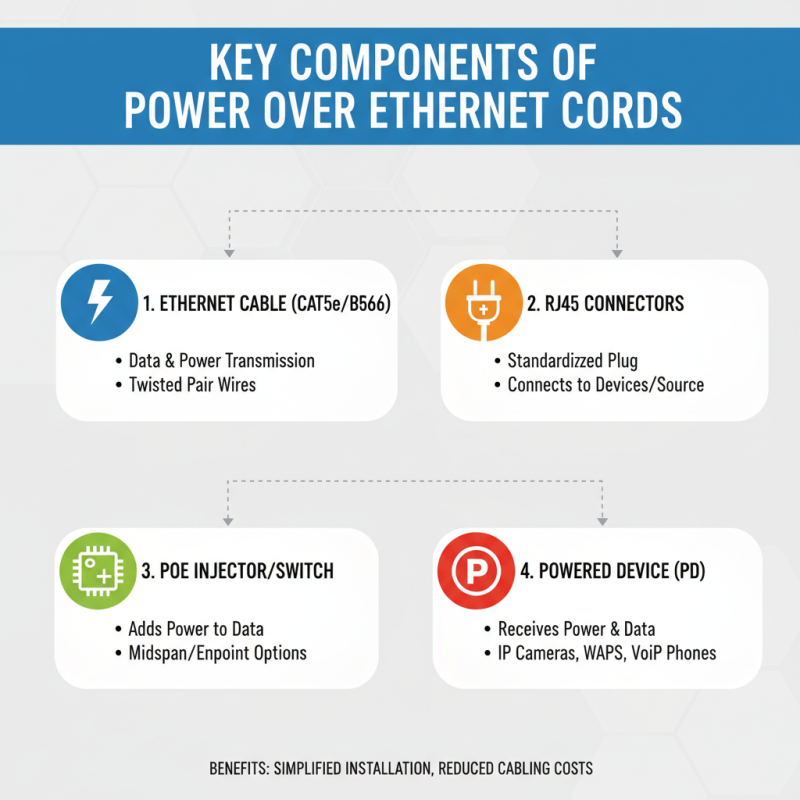
Power Over Ethernet (PoE) cords are essential for powering devices such as IP cameras, wireless access points, and VoIP phones. These cords simplify installation and reduce costs by providing both power and data over a single cable. Understanding the key components of PoE cords is vital for effective implementation.
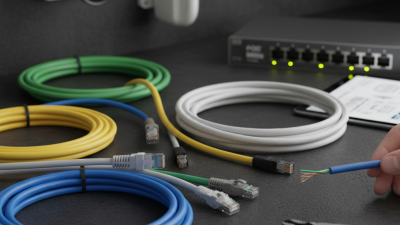
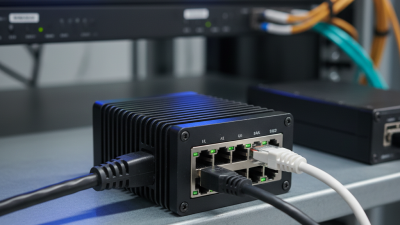
At the core of a PoE system are three main components: the power sourcing equipment (PSE), the powered device (PD), and the Ethernet cable. The PSE, typically a switch, supplies power. The PD, like an IP camera, receives the power. The Ethernet cable, commonly Cat5e or Cat6, carries both power and data. According to a report from ResearchAndMarkets, the global PoE market is projected to reach USD 3.8 billion by 2026, indicating a significant trend toward this technology.
Tips for installation: Ensure the Ethernet cable is rated for the required power level. A Cat6 cable can handle higher power than Cat5e. Also, check the power budget of the PSE. Overloading can lead to device failure. Remember, not all devices support PoE, so always verify compatibility first.
The growth in PoE technology may lead to potential issues. Some older devices might not work seamlessly with newer PoE standards. Implementing PoE can also lead to increased energy consumption if not managed properly. Regular assessments of devices connected to the PoE network are crucial to maintain efficiency.
How Power Over Ethernet Supplies Power and Data Simultaneously
Power over Ethernet (PoE) technology enables the simultaneous transmission of power and data through a single Ethernet cable. This system simplifies installation, reduces costs, and provides flexibility in device placement. According to a report by the Ethernet Alliance, PoE can deliver up to 90 watts of power, catering to devices like security cameras, VoIP phones, and wireless access points. The ability to run both power and data connections from one line significantly decreases the amount of clutter associated with multiple cables.
In practical applications, consider the challenges that arise when powering multiple devices in remote locations. Traditional wiring can be cumbersome and expensive. PoE eliminates such problems, allowing devices to be placed where they are most effective. A study by Technavio found that the global PoE market is expected to grow by over 20% annually through 2025. This rapid expansion underscores the increasing reliance on PoE technology across various industries.
While PoE systems streamline connections, they do have limitations. For example, the distance between the power source and the device must be within 100 meters. Beyond this range, performance may suffer. Also, not all devices are compatible with PoE technology, which presents additional challenges in mixed environments. Evaluating these factors is crucial for effective implementation.
Industry Applications and Benefits of Using PoE
Power over Ethernet (PoE) technology has gained significant traction across various industries. Reports indicate that by 2024, PoE-enabled devices are expected to reach a market value of over $2 billion. This growth is largely due to the efficiency and flexibility PoE offers in powering devices such as IP cameras and VoIP phones, while simultaneously transmitting data over the same cable.
In healthcare, PoE simplifies installation processes by reducing wiring needs. Medical devices often require reliable power sources. The use of PoE allows for centralized power management, which can improve reliability. A study showed that hospitals adopting PoE technology reduced installation times by up to 30%. Meanwhile, in the retail sector, PoE supports digital signage and surveillance systems efficiently. Businesses can easily relocate devices, adapt to changing layouts, and cut maintenance costs.
However, challenges do exist. Not all existing infrastructure can support PoE, necessitating upgrades that may deter some businesses. Additionally, over-reliance on a single cable for power and data can pose risks during outages. Evaluating specific needs and infrastructure capabilities is vital for maximizing PoE's benefits in any industry.
What is Power Over Ethernet Cord and How Does It Work? - Industry Applications and Benefits of Using PoE
| Dimension |
Data |
| Cable Type |
Category 5e, Category 6, Category 6a |
| Power Delivery |
Up to 30W |
| Data Rate |
1 Gbps to 10 Gbps |
| Typical Applications |
IP Cameras, VoIP Phones, Wireless Access Points |
| Benefits |
Reduced cabling, Simplified installation, Cost efficiency |
| Standards |
IEEE 802.3af, IEEE 802.3at, IEEE 802.3bt |
| Typical Voltage |
48V |
Standards and Power Classifications in Power Over Ethernet Systems
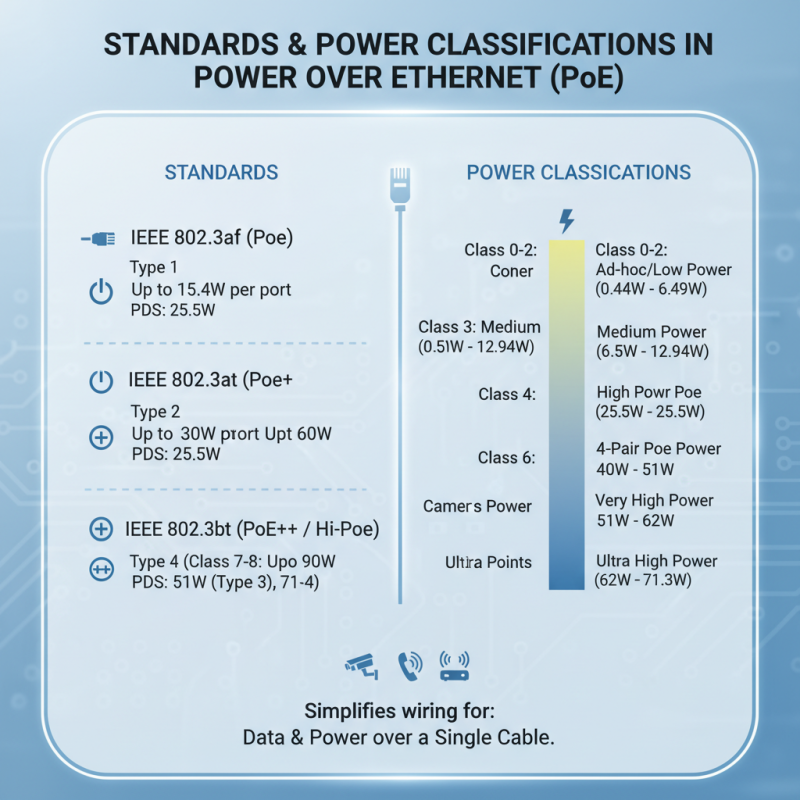
Power over Ethernet (PoE) technology simplifies the wiring of devices like cameras, phones, and access points. It allows both data and electrical power to travel over a single Ethernet cable. Understanding the standards and classifications used in these systems is crucial for effective deployment.
Several standards govern PoE technology, including IEEE 802.3af, 802.3at, and 802.3bt. The 802.3af standard provides up to 15.4 watts of power per port. This is adequate for many low-power devices. The 802.3at, known as PoE+, increases this capacity to 30 watts. Finally, the 802.3bt, or PoE++, supports up to 60 watts or more, enabling the use of high-demand devices. Knowing these standards ensures proper matching between power sources and devices.
Power classifications in PoE systems are another critical aspect. Devices are categorized based on their power requirements. Class 0, for example, requires up to 15.4 watts, while Class 4 demands more than 30 watts. Misclassifying devices can lead to inefficient operation. It may cause devices to underperform or even cause damage. Proper planning and knowledge are vital for achieving reliability and efficiency in a PoE network.