How to Choose the Right Poe Ethernet Switches for Your Network Needs?
Choosing the right PoE Ethernet switches is crucial for modern network infrastructures. These devices must cater to specific needs, ensuring both efficiency and reliability. According to a report by Grand View Research, the global PoE switches market is expected to grow at a CAGR of 12.3% from 2021 to 2028. This growth signals a rising demand for PoE technology in various sectors.
Industry expert John Smith, a leading voice in networking solutions, states, “Selecting the right PoE Ethernet switches can significantly enhance your operational bandwidth.” His insights remind us that not all switches are created equal. Factors like power requirements, port density, and performance levels should guide decisions.
It's essential to understand that even industry leaders can make missteps in their selections. Many overlook compatibility with existing systems, leading to network bottlenecks. The details matter—considering device types and future scalability can save costs in the long term. Investing time in research will yield better outcomes when choosing PoE Ethernet switches for your unique needs.
Understanding Power over Ethernet (PoE) Technology
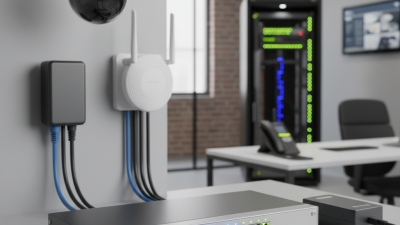
Power over Ethernet (PoE) technology simplifies network wiring by transferring data and electricity through the same cable. This streamlines installations, particularly in locations where outlets are not available. With PoE, devices like IP cameras, access points, and VoIP phones can operate without needing separate power sources. This brings both convenience and efficiency to network setups.
However, not all devices and switches support the same PoE standards. Understanding these standards is crucial. For instance, PoE, PoE+, and PoE++ vary in the amount of power delivered. This can affect compatibility and performance. Miscalculating your power needs can lead to insufficient energy for your devices, resulting in failures or downtimes.
Reflecting on potential pitfalls is important. Choosing the right PoE switch means analyzing your current network layout and future needs. It's easy to overlook specific device requirements or to underestimate power consumption. A well-informed decision requires assessing both immediate and long-term goals to optimize functionality. Balancing these factors can ultimately enhance the reliability of your network.
Power over Ethernet (PoE) Switches Comparison
Different Types of PoE Standards and Their Applications
When selecting Power over Ethernet (PoE) switches, understanding the various PoE standards is crucial. Currently, the most common standards are IEEE 802.3af, IEEE 802.3at, and IEEE 802.3bt. Each standard provides a different power budget. The 802.3af standard offers up to 15.4 watts per port. This is suitable for devices like IP cameras and VoIP phones. On the other hand, the 802.3at standard, also known as PoE+, upgrades this to 30 watts per port, which can support devices that require higher power, such as wireless access points.
The newer IEEE 802.3bt standard takes this a step further. It provides up to 60 watts per port, allowing for more power-intensive devices. According to a 2022 industry report, 30% of companies are now adapting their networks to support 802.3bt capabilities. This trend highlights a growing demand for devices like LED lighting systems and high-performance security cameras. However, implementing these standards requires careful consideration. Not all existing infrastructure can handle the increased load effectively.
There's also the question of compatibility and future-proofing. Many installations still utilize older standards. Companies must weigh the cost of upgrading versus the potential benefits of future-ready network infrastructure. Transitioning can present challenges, such as ensuring that existing cables support higher voltage. Understanding these aspects can lead to better decision-making when selecting the right PoE switch for specific applications.
How to Choose the Right Poe Ethernet Switches for Your Network Needs?
| PoE Standard |
Maximum Power per Port |
Typical Applications |
Range |
Switch Capacity |
| IEEE 802.3af (PoE) |
15.4 W |
IP Phones, Wireless Access Points |
Up to 100 meters |
Up to 1000 Mbps |
| IEEE 802.3at (PoE+) |
30 W |
High-Power Wireless Access Points, PTZ Cameras |
Up to 100 meters |
Up to 1000 Mbps |
| IEEE 802.3bt (PoE++ or 4PPoE) |
60 W / 100 W |
LED Lighting, Advanced IP Cameras |
Up to 100 meters |
Up to 10 Gbps |
| IEEE 802.3af/at Compatibility |
Supports up to 30 W |
Mixed Device Use |
Up to 100 meters |
Varies by model |
Key Factors to Consider When Choosing a PoE Ethernet Switch
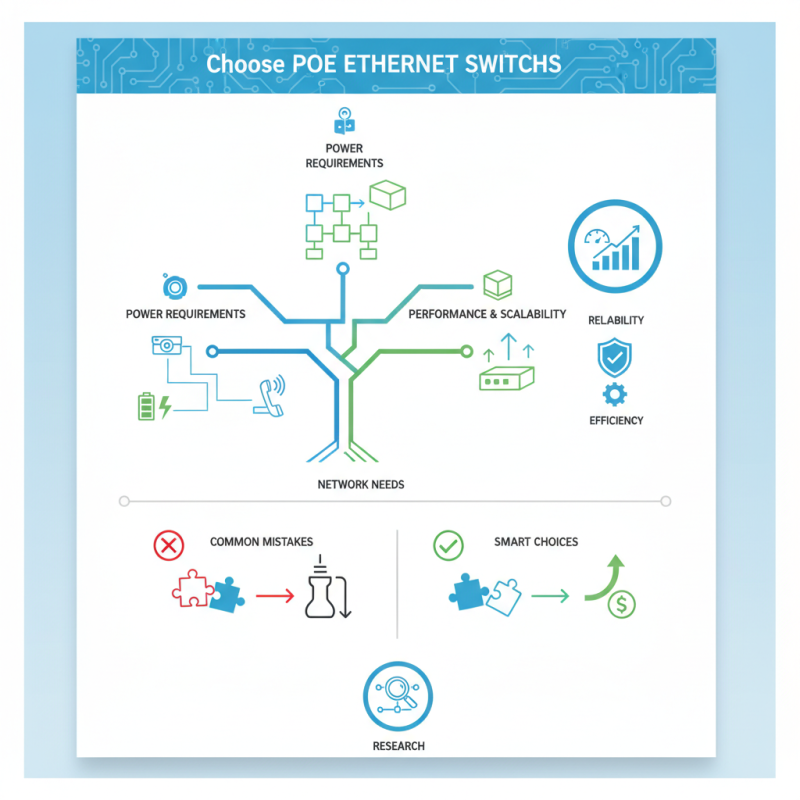
When choosing a PoE Ethernet switch, several key factors are crucial for optimal performance. Understanding power budget is fundamental. Each PoE device requires a specific power level. Calculate the total power needed before selecting a switch. Too little power could lead to device failures. Some users underestimate their needs, creating issues down the line.
Port count matters as well. Analyze your current and future network requirements. If your operations expand, you need extra ports. Choose a switch that can accommodate this growth. Ignoring future needs may lead to unexpected costs. Look for additional features too. Managed switches offer more control over network traffic and security options. This could improve efficiency and protection.
Don’t overlook the switch's performance specifications. Data transfer rates and switching capacity are vital for stable connections. A low-quality switch can cause latency issues. The physical environment also plays a role; consider placement and cooling. Heat accumulation can impact performance negatively. Reflect on installation challenges before committing. Make thoughtful choices to avoid potential pitfalls.
Assessing Network Size and Device Compatibility for PoE Switches
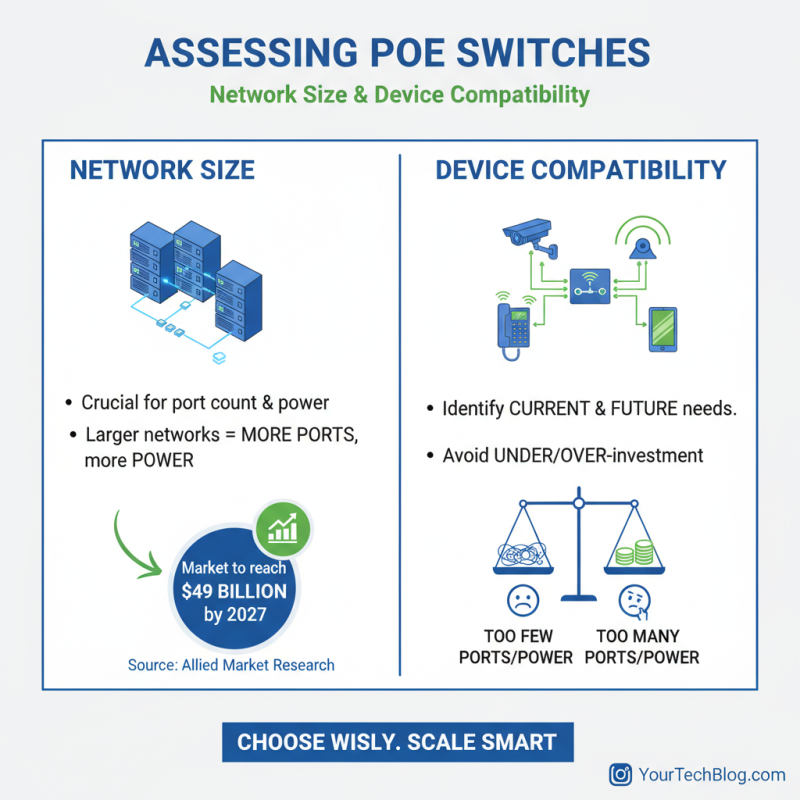
Choosing the right PoE (Power over Ethernet) switch requires careful consideration of network size and device compatibility. Understanding your network's size is crucial. A report from Allied Market Research suggests the PoE switch market is projected to reach $49 billion by 2027, highlighting growing dependency. Larger networks demand more ports and greater power output. Assess your current and future device needs to avoid under or over-investment.
Compatibility is equally essential. Different devices have varying power requirements. For instance, IP cameras typically require around 15-30 watts per device, while VoIP phones consume about 5-15 watts. This variability can complicate switch selection. Ensure your PoE switch can handle all devices reliably.
**Tip:** Always check the power budget of your PoE switch. This budget reflects the maximum power the switch can distribute. Aim for a switch that exceeds your total device requirements to account for future growth. Planning is key.
**Tip:** Investing in a managed PoE switch can offer more control. Such switches allow for better monitoring of power usage and device performance. This flexibility supports scalability and adjustments as your network evolves.
While selecting the right PoE switch, remain vigilant and adaptable. Network needs change, and so do device technologies. Regularly reassess your setup to ensure ongoing compatibility.
Budgeting for PoE Ethernet Switches: Costs and Value Considerations
Budgeting for PoE Ethernet switches involves understanding both costs and value. The market for PoE switches is evolving rapidly. According to a report by ResearchAndMarkets, the global PoE switch market is expected to grow at a CAGR of 9.3% from 2023 to 2030. This growth signifies increasing reliance on powered devices, enhancing network infrastructure.
When considering your budget, evaluate the power allocation. A typical PoE switch can deliver 15.4W per port with PoE standard, while PoE+ can supply up to 30W. However, it's crucial to analyze actual needs. Overestimating power requirements can lead to unnecessary spending. Conversely, underestimating may cause network disruptions.
Maintenance and durability are factors that affect long-term investments. While initial costs may vary significantly between models, total cost of ownership should be analyzed. A report from MarketsandMarkets indicates that operational costs can be significantly reduced with energy-efficient models. This consideration adds another layer to budgeting effectively. Keep in mind, purchasing a low-cost switch might incur higher operational costs over time.