

6 Doubts About PoE (Power over Ethernet)
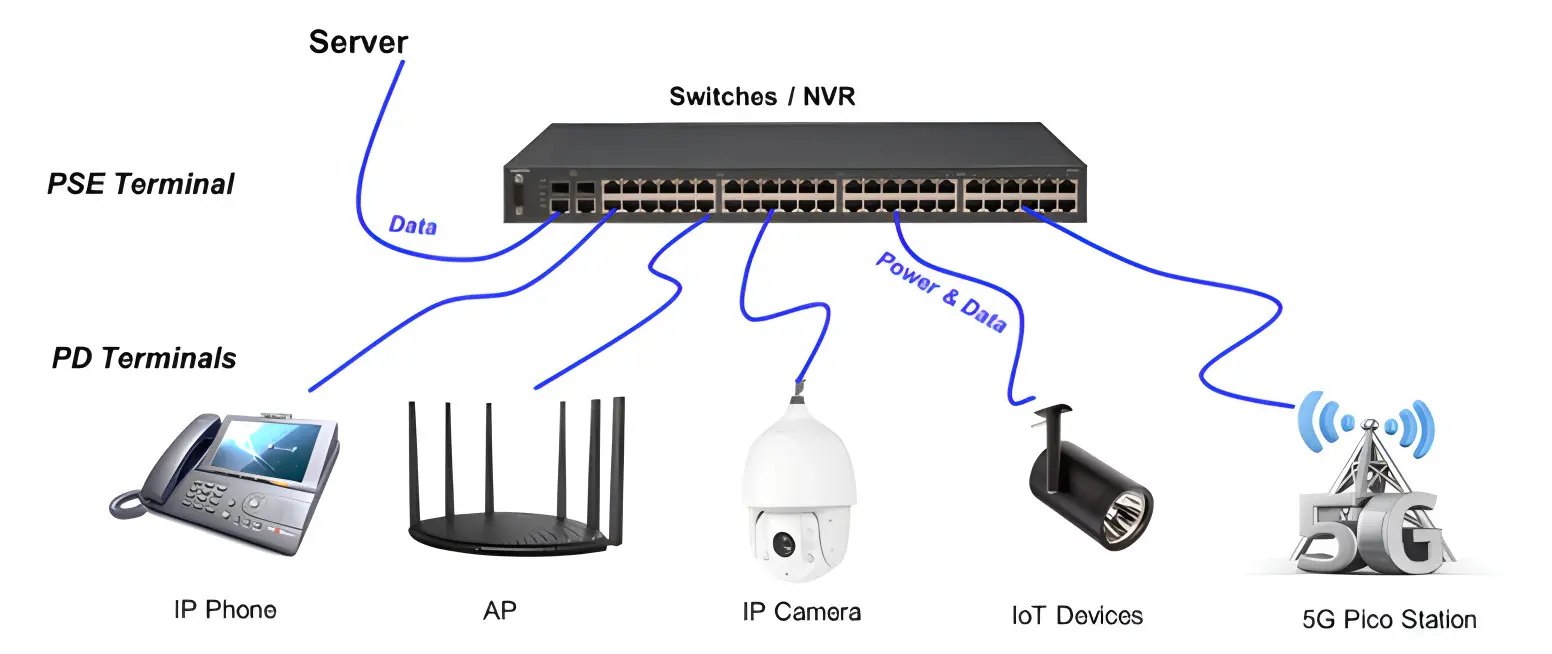
With the popularization of PoE technology, the IEEE 802.3af/at standard has been widely adopted and has become an ideal choice for networked power supply in the field of smart buildings. VoIP phones, IP cameras, APs and other equipment can be powered through a single network cable. Although PoE technology has made significant progress, people's doubts about POE technology still exist today. Below we list the six most common doubts for discussion.
POE Unreliable?
1. Simplified installation: POE technology allows only one Ethernet cable to transmit
data and power at the same time, reducing the need for power cords and sockets, making the installation of the equipment easier and more economical.
2. Increase reliability: POE power supply technology can improve the reliability of power supply by equipping it with a backup power supply or connecting it to a UPS (uninterruptible power supply). Even in the event of a power outage, POE powered equipment can continue to operate.
3. Flexible wiring: Since Poe Devices only require Ethernet cables for power, they can be located far away from wall sockets or fixed-position power cords, and the location of the device can be changed at will.
4. Reduce the number of equipment: POE power supply can reduce the number of equipment and the maintenance workload of the equipment. Moreover, since POE power supply does not have voltage drop or power line impedance problems, it can reduce the occurrence of compatibility problems.
5. Reduce the risk of electric shock from the power line: Since POE technology transmits power through the Ethernet cable, it reduces the risk of electric shock from the power line and improves the safety of users and equipment.
PoE Is Not Cost Effective?
● Because PoE does not require a separate power supply line. That said, installation labor costs will be significantly reduced since there is no need to hire a licensed electrician to perform the installation.
● PoE systems are easy to maintain. Users can enable it to automatically shut down and remotely reset at night, collect relevant information from network devices such as servers, printers, hubs and switches, and manage it effectively through Simple Network Management Protocol (SNMP).
● PoE enables network improvements, which further reduces costs. With PoE, you can install network devices such as IP cameras or sensors away from the grid without the need for more AC power lines.
● Finally, PoE systems can be connected to an uninterruptible power supply (UPS). This means continuous power supply to mission-critical systems is guaranteed even if regular electrical service is interrupted.
PoE Power Is Limited?
With the widespread expansion of IoT networks based on PoE power supply, more and more power-consuming devices have been born. Although the IEEE 802.3at standard only applies to low-power devices with a maximum power of 30W. However the latest standard IEEE 802.3bt allows a maximum power 90Watts. And the semiconductor industry is actively pushing to reduce the power consumption of individual transistors, which allows integrated device manufacturers (IDMs) to do more work with less power. Therefore, the industry has more power budget available for PD.
PoE is only used for VoIP and IP Camera?
In the past, PoE was mainly used for VoIP phones and IP cameras. But now PoE technology is widely used in lighting equipment, LCD smart screens, IT education, smart medical care, smart transportation, sensors, asset tracking, TV broadcasting, access control,etc.
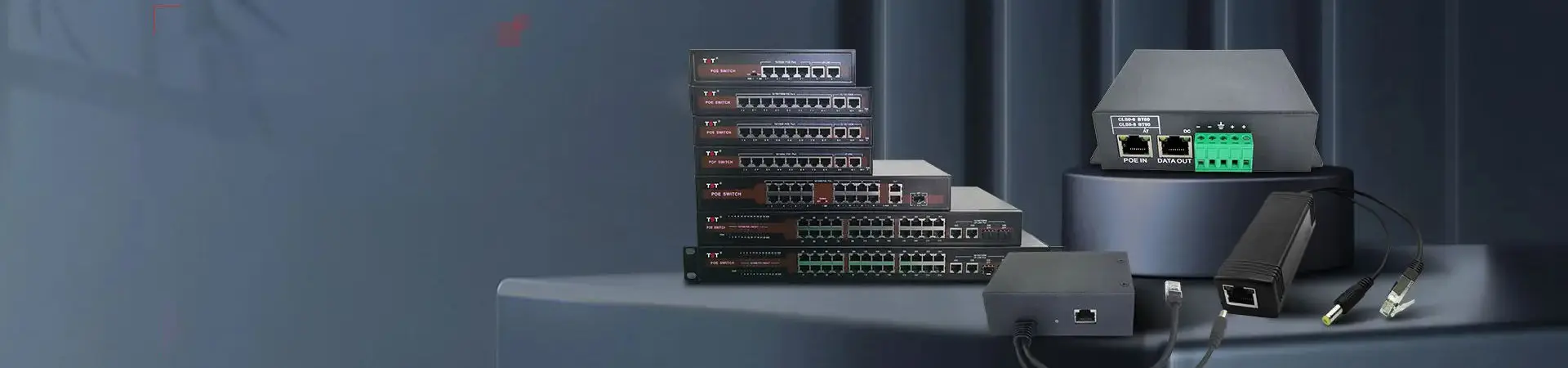
As a professional R&D and manufacturer of PoE products, TST's technical team provides users with PoE switches, PoE power supplies, PoE splitters and other products, and will soon launch the latest PoE digital network power docking station. It combines PoE functionality (supports 90W PoE++ input) and is compatible with USB Type-C and Type-A laptops and mobile devices, allowing PoE to be applied to more terminal devices.
PoE Is Not Suitable for IoT Applications?
As the scale of the Internet of Things (IoT) expands, the number of IoT terminal devices is also increasing year by year. Among them, many smart sensors use only a small amount of power but must be connected to the Internet. Although in many cases the IP address is provided via a wireless protocol, the connection must also be made using a local gateway, which is most likely using a wired Ethernet connection to the Internet.
Adding PoE to these local gateways is a low-cost option. The power required by wireless APs is usually provided by the main battery (requires replacement) or an offline power supply (requires AC-DC converter). PoE technology can eliminate its dependence on primary batteries, offline power supplies and wireless connections.
And IoT security is always an issue, and that goes hand in hand with wireless connectivity. A wired Ethernet connection will greatly reduce these concerns because it requires physical access to the terminal.
Finally, PoE is reliable and stable without frequency interference and packet resending problems.
PoE consumes a lot of power?
Signal integrity and power consumption are issues of great concern to engineers.
The IEEE 802.3bt standard requirements are as follows:
90Watts must be transmitted through all four twisted pairs within the cable. The maximum cable length is 100 meters.
When using only two twisted pairs, the maximum DC link resistance should not exceed 12.5 ohms. Use Cat5 or higher cable. As long as these specifications are met, power consumption will not be a problem.
Conclusion
As a safe and reliable power supply, power over Ethernet technology keeps pace with the development of IoT devices. With the latest IEEE 802.3bt standard, there is higher power, more efficient transmission and backward compatibility. Engineers now have a larger power budget to work with, and we believe PoE networks devices will be able to meet more and more application requirements in the near future.