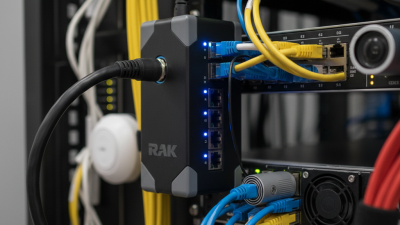
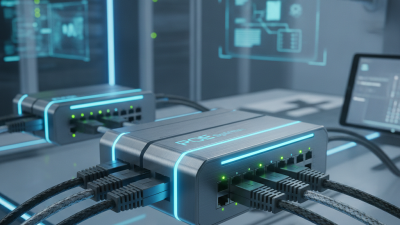
What is a Poe Splitter and How Does it Work?
In a world where technology constantly evolves, understanding tools like Poe Splitters becomes essential. These devices provide power and data connectivity through a single cable. For those managing network devices, knowing how Poe Splitters work can significantly enhance efficiency.
Poe Splitters serve as a bridge between Power over Ethernet (PoE) networks and non-PoE devices. This technology enables users to connect devices without needing separate power sources. When integrated properly, Poe Splitters simplify installations and reduce cable clutter. However, users must ensure proper compatibility and specifications.
Despite their advantages, Poe Splitters are not without challenges. Users might face installation issues or device compatibility. Not all Poe Splitters are equal; therefore, choosing the right one is crucial. Understanding these nuances can help ensure that systems function reliably and effectively over time.
What is Power over Ethernet (PoE) Technology?
Power over Ethernet (PoE) technology has revolutionized the way networking devices receive power. By using standard Ethernet cables, it delivers both data and electricity to devices like IP cameras and Wi-Fi access points. This eliminates the need for separate power sources. According to a report by the International Electrotechnical Commission (IEC), the PoE market is expected to grow significantly, reaching a value of nearly $2 billion by 2026.
The efficiency of PoE allows for easier installation and reduced infrastructure costs. Devices powered via PoE can be placed in locations without power outlets. This flexibility is crucial in settings such as outdoor surveillance or remote office spaces. A study by MarketsandMarkets has found that approximately 60% of businesses adopting PoE report improved productivity due to reduced downtime and streamlined management.
While the benefits are clear, challenges remain. Not all existing infrastructure supports PoE, requiring upgrades. Compatibility issues can also arise with older hardware. Organizations must assess their network needs carefully, considering future scalability. Ultimately, investing in PoE technology could be a step toward a more connected and efficient future.
Power over Ethernet (PoE) Technology Usage by Application
This bar chart represents the estimated number of devices powered by Power over Ethernet (PoE) technology across different applications. IP cameras dominate the usage, followed by wireless access points and VoIP phones. Understanding these metrics can help in designing more efficient network solutions.
Understanding the Basics of a Poe Splitter
A PoE splitter is a device that separates power from data in a Power over Ethernet (PoE) setup. It is essential for devices that do not support PoE natively. For instance, many older IP cameras or wireless access points require both data and power for operation. By using a PoE splitter, you can easily reduce cable clutter by combining power and data in one Ethernet cable. The splitter extracts power and provides it through a separate port.
When choosing a PoE splitter, ensure it meets your specific voltage requirements. Common PoE standards operate at 48V, but many devices might need lower voltages such as 5V or 12V. Look for a splitter that can convert to the necessary voltage while maintaining reliability. Quality should not be compromised, as faulty splitters can damage sensitive network devices.
Tips: Always check the splitter's wattage rating. Overloading the device can cause overheating. If your network speed fluctuates, consider using a higher category Ethernet cable. Cat 5e or Cat 6 typically offers improved performance and bandwidth. Also, ensure your network's overall design supports the added load of PoE devices.
Key Components and Functionality of PoE Splitters
A PoE splitter is a device that separates power and data from a single Ethernet cable. It plays a critical role in the Power over Ethernet (PoE) ecosystem.
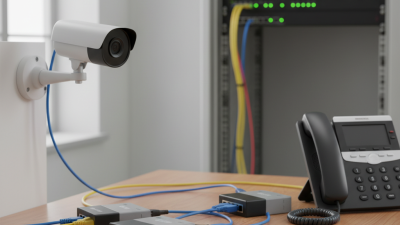
With a splitter, you can power devices like IP cameras and wireless access points without needing a nearby power outlet.
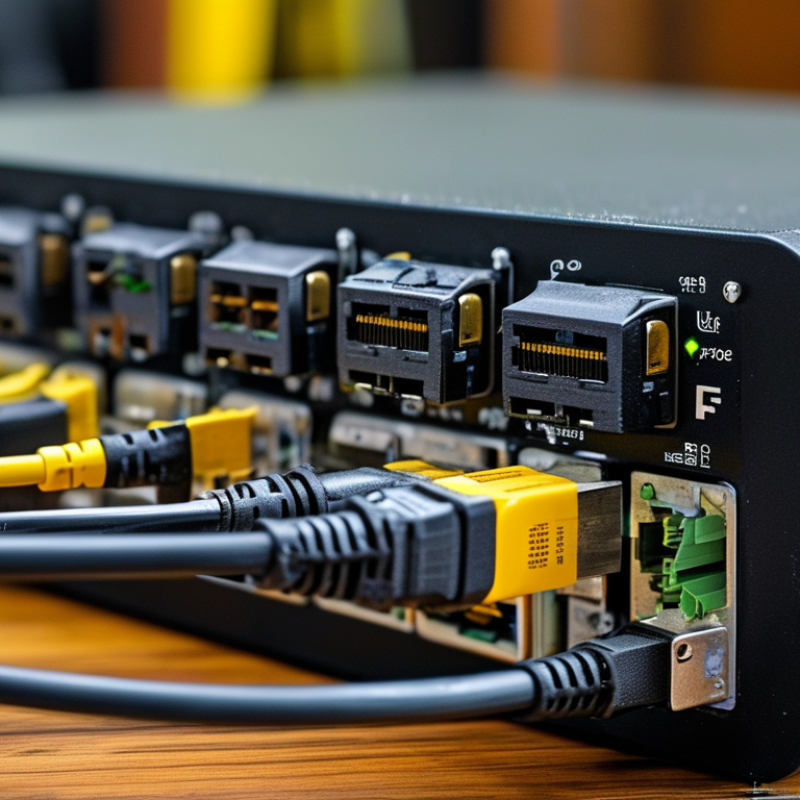
Key components of a PoE splitter include the input port, output data port, and output power port. The input port connects to the PoE source, which supplies both power and data.
The data port connects to the device, allowing data transfer. The power port provides the necessary voltage for operation. Typical voltages are either 5V, 12V, or 24V.
This versatility is significant for various applications and devices.
Functionality is straightforward but requires some understanding. When the splitter receives the PoE signal, it extracts the power and data. However, improper use can lead to insufficient power supply.
Overloading the splitter can cause overheating, which poses risks. It’s essential to match the splitter with the device’s power requirements.
Ultimately, a PoE splitter brings convenience but comes with challenges that require careful consideration.
Advantages of Using Poe Splitters in Networking Systems
Power over Ethernet (PoE) splitters are becoming essential in modern networking systems. They separate power and data from a single cable, simplifying installation. By utilizing PoE technology, businesses gain flexibility in device placement. This is particularly beneficial in areas where traditional power outlets are scarce.
Using PoE splitters offers significant advantages. They enable the deployment of devices like cameras and wireless access points without the need for additional power sources. According to industry reports, integrating PoE solutions can reduce installation costs by up to 30%. This cost-efficiency is attractive for many organizations. Additionally, PoE technology enhances network scalability. As demands grow, devices can be added without major overhauls.
Tip: Always check the power requirements of your devices before choosing a PoE splitter. Mismatched specifications can lead to inadequate performance.
Network reliability improves with PoE splitters. They reduce the mess of wiring and potential points of failure. However, users should also be aware that not all splitters are created equal. It’s crucial to select models that meet specific power standards. A poor choice can affect network performance negatively.
Tip: Regularly update your networking equipment to maintain optimal performance. Outdated devices can lead to bottlenecks in your network infrastructure.
Industry Standards and Protocols for PoE Devices
Power over Ethernet (PoE) technology allows for the transfer of power and data through a single cable. This is especially useful for devices like IP cameras and wireless access points. However, understanding the industry standards and protocols for PoE devices is crucial. The IEEE 802.3 standards, for example, define how PoE devices communicate and receive power efficiently.
Installation can become tricky. For best results, it’s essential to follow proper cabling guidelines. Using the correct Cat5e or Cat6 cables ensures optimal performance. Conducting regular checks helps to avoid power fluctuation issues, which can disrupt device efficiency.
**Tip:** Always verify that your PoE devices are compatible with the standards in use. Mismatched devices can lead to reduced performance or even damage.
Furthermore, the classification of PoE devices provides a framework for understanding power requirements. There are five power classifications, ranging from Class 0 to Class 4. Being aware of these classifications prepares users to select the right PoE splitter for specific needs.
**Tip:** Keep in mind that while some devices may fit into multiple classes, using them in the correct class will enhance safety and functionality.
A well-planned PoE system can improve efficiency, but misunderstandings about standards can lead to frustrations. Addressing these potential pitfalls early saves time and resources.
What is a Poe Splitter and How Does it Work? - Industry Standards and Protocols for PoE Devices
| Feature |
Description |
Importance |
| Power Output |
Typically between 12W to 30W depending on the PoE standard. |
Determines the number of devices that can be powered. |
| Data Transmission |
Supports up to 1 Gbps depending on the PoE variant. |
Crucial for ensuring high-speed communication. |
| Compatibility |
Works with IEEE 802.3af, 802.3at, and 802.3bt standards. |
Ensures interoperability among PoE devices. |
| Form Factor |
Various types including wall-mounted, desktop, and rack-mounted options. |
Flexibility in installation for different environments. |
| Safety Features |
Includes overcurrent and short-circuit protection. |
Protects both the splitter and connected devices. |