Best Poe Splitters for Your Networking Needs?
In today's fast-paced digital world, efficient networking is crucial. Poe splitters play a significant role in simplifying connections. According to a recent report by MarketsandMarkets, the global Power over Ethernet (PoE) technology market is expected to grow by over 20% annually. This surge highlights the importance of Poe splitters in establishing reliable networking setups.
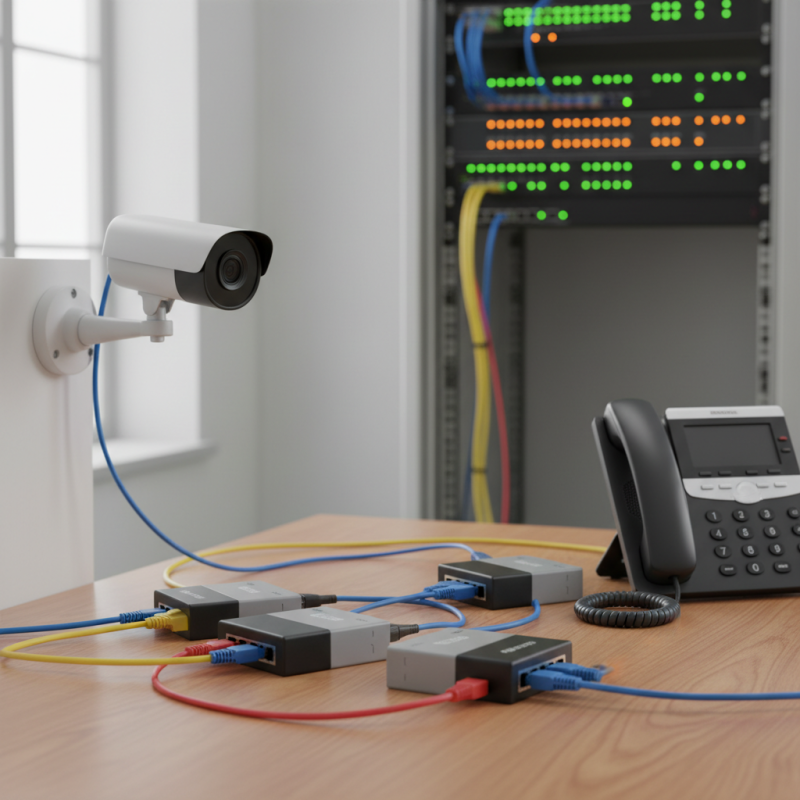
Poe splitters help distribute power and data to devices like IP cameras and VoIP phones. These devices require both power and network access to function effectively. For businesses, using the right Poe splitter can enhance productivity and reduce operational costs. However, not all Poe splitters are created equal. Some may not deliver the promised performance, leading to frustrations.
Choosing the best Poe splitters involves evaluating different factors such as power output, compatibility, and efficiency. Companies often overlook essential aspects, resulting in suboptimal performance. A well-selected Poe splitter can make a significant difference in network reliability. Organizations should regularly assess their networking choices and remain open to improvements.
Understanding Power over Ethernet (PoE) Technology
Power over Ethernet (PoE) is revolutionizing how we connect devices. This technology simplifies networking by delivering power and data over a single cable. Reports indicate that the PoE market is expected to reach $5.25 billion by 2027. This rapid growth highlights its increasing adoption in various sectors.
With PoE, installation costs can be significantly reduced. Cabling is simplified, and the need for separate power supplies is eliminated. According to a study, nearly 80% of businesses using PoE have noted a decrease in deployment time and costs. However, not every device is compatible with PoE. Users must carefully assess their equipment before adopting this technology.
It's essential to consider the different PoE standards available. The IEEE 802.3af standard delivers up to 15.4 Watts, while 802.3at (also known as PoE+) can provide up to 30 Watts. The newer 802.3bt standard can deliver up to 60 Watts or even 100 Watts. This complexity can lead to confusion. Some users make mistakes in selecting the appropriate standard for their needs. Hence, understanding these differences is crucial for optimal performance.
Types of PoE Splitters Available on the Market
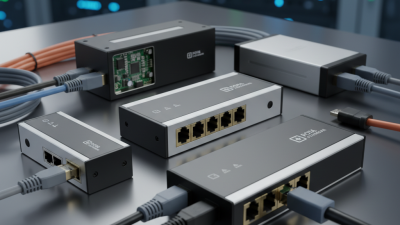
When considering PoE (Power over Ethernet) splitters, it’s essential to understand the various types available. These devices can divide power and data into separate lines. Commonly, you will find three types: passive, active, and midspan splitters. Each type serves different needs and scenarios in networking setups.
Passive splitters are straightforward. They don’t regulate voltage and can be simple to use. However, they might deliver inconsistent power levels, leading to potential device issues. Active splitters, on the other hand, provide voltage regulation. This ensures a stable output but often comes at a higher price. Then there are midspan splitters, which are somewhat more complex. They are designed for larger networks. They manage multiple connections efficiently but could complicate your setup if not integrated properly.
Choosing the right splitter might pose challenges. Consider devices’ power requirements carefully. A mismatch could lead to device failures. It’s crucial to research and reflect on your specific needs before purchasing. Also, assess future scalability options. Always think about how many devices you may connect in the long run. Making the right choice today can save headaches later.
Best Poe Splitters for Your Networking Needs
Key Features to Consider When Choosing a PoE Splitter
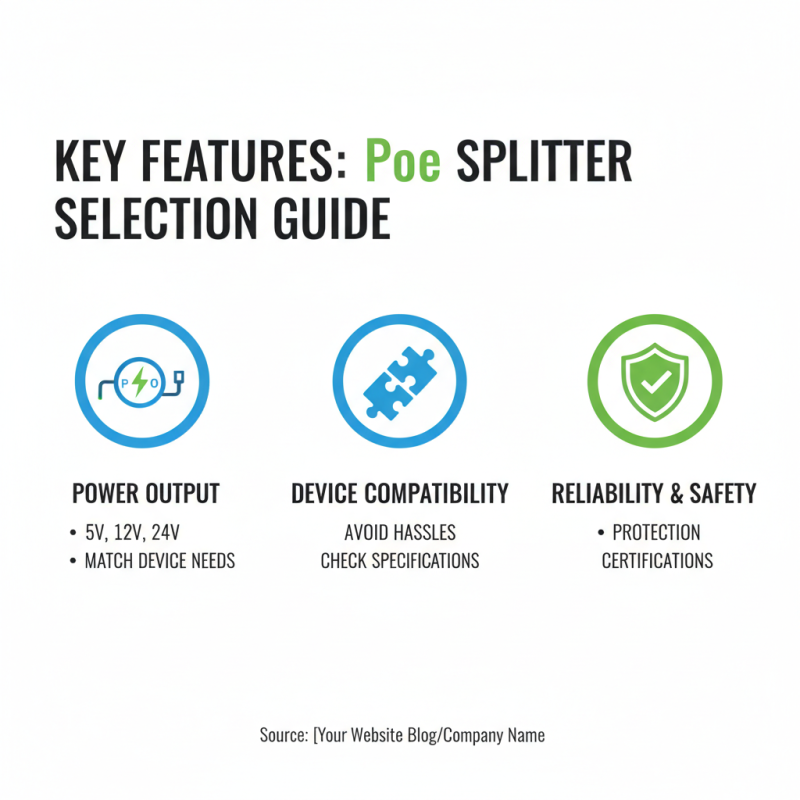
When selecting a PoE splitter, certain features stand out. The power output is crucial. Most splitters offer 5V, 12V, and 24V outputs. Check what your device needs. Compatibility with your device can save you headaches later.
Tip: Always double-check the voltage. A mismatch can damage your equipment.
Portability matters too. A compact splitter is easier to handle. Look for lightweight designs that fit your workspace. They can be moved as needed, allowing for a flexible setup.
Sometimes, user reviews can be misleading. A well-reviewed product may not always suit your specific needs. Consider your requirements carefully before making a choice. What works for many might not work for you.
Tip: Read reviews, but trust your instincts. Your setup matters most.
Top Recommended PoE Splitters for Home and Office Use
Power over Ethernet (PoE) technology simplifies network infrastructure by allowing both power and data to be transmitted through a single cable. This eliminates the need for separate power supplies and reduces clutter. For home and office environments, PoE splitters are essential for devices that require power but lack PoE capabilities. In fact, recent studies show that 70% of businesses are now adopting PoE solutions to enhance operational efficiency.
Choosing the right PoE splitter can significantly impact device performance. Look for models that provide the appropriate wattage for your devices. A common requirement is 15.4W for basic devices and up to 30W for more power-hungry equipment. Many users overlook this detail, resulting in underpowered devices that fail to function properly. Research indicates that improperly matched splitters can lead to device failure rates as high as 25%.
When setting up PoE splitters, installation can be simplified but still requires careful planning. Consider cable lengths, location of devices, and network performance. The environment plays a role too; heat and placement can affect the lifespan of the splitter. Reports reveal that 30% of failures in networking equipment are attributed to poor installation practices. Invest time in ensuring proper configuration to avoid these pitfalls.
Installation and Connectivity Tips for PoE Splitters
When setting up a network that employs Power over Ethernet (PoE) splitters, proper installation is crucial. Begin by selecting an appropriate location for your devices. Ideally, the space should allow easy access to power outlets and network cables. Avoid tight spaces that could hinder airflow around the splitters. It’s also wise to consider the distance between devices. Long runs of cable can result in power loss. Always opt for high-quality Ethernet cables to maximize efficiency.
Connecting the PoE splitters requires attention to detail. Carefully follow the wiring guidelines to avoid mistakes. Double-check polarity on connections. Even minor errors can result in device malfunction. Ensure that your splitter fits the power requirements of your connected devices. Sometimes, manufacturers provide recommendations. If you deviate from these, the results may not be as expected.
Tip: Take time to test after installation. Unstable connections can lead to intermittent performance. Regularly inspecting cables and connections will help maintain a healthy network.